Receiving a container of defective injection molded parts from China is one of the most expensive mistakes a product team can make. By the time the shipment arrives at your dock, your options are limited: rework at your cost, negotiate a credit with a supplier who has already been paid, or eat the loss entirely.
The solution is not to trust your supplier’s internal QC. It is to understand exactly what should be inspected, when, and what the acceptance criteria look like, and to make those requirements part of your purchase order before production begins.
This guide covers the full inspection framework for injection molded parts and molds sourced from China, drawn from industry standard acceptance criteria used by qualified mold manufacturers.
Why Pre-Shipment Inspection Matters More Than You Think
Most quality problems in Chinese injection molding are not the result of incompetence. They are the result of misaligned expectations: buyers who assume certain standards are understood, and suppliers who optimize for speed and cost when those standards are not explicitly defined.
A few realities worth knowing before you place your next order:
Samples and production parts are not the same thing. Factories routinely produce T1 samples using their best machines, most experienced operators, and freshest material. Mass production runs on different equipment, faster cycle times, and less oversight. If you only inspect samples and not production parts, you are inspecting the wrong thing.
Cash refunds after shipment are extremely rare. Most Chinese suppliers will offer rework if defects are documented clearly, but once parts leave the port, your leverage drops significantly. Pre shipment inspection is your primary point of control.
Material substitution is a real risk. Prime grade resin costs more than recycled or blended material, and some suppliers cut costs by using lower-grade alternatives without disclosure. Without independent material verification, you cannot confirm that the specified resin was actually used in production.
The 4 Stages of Quality Control in Chinese Injection Molding
A qualified supplier should have quality controls at four distinct stages. Understanding each stage helps you know what to ask for and what records to request.
Stage 1: Incoming Material Inspection
Before production begins, the resin should be verified against the material certificate. This includes checking the lot number, verifying the grade matches the drawing specification, and confirming moisture content for hygroscopic materials like nylon and PC. Any deviation from the specified material should require your written approval before molding starts.
Stage 2: First Article Inspection (T1 Report)
The T1 report is the most important quality document you will receive. It should include a full dimensional measurement of every critical feature on the drawing, measured against actual tolerances, with pass/fail results recorded for each dimension. The report should cover multiple cavities, not just one. In a 16-cavity tool, cavity-to-cavity variation is as important as absolute dimensions.
Per industry acceptance standards, T0 through T3 trial shots must each have a documented inspection report. Do not accept verbal confirmation that T1 looked good.
Stage 3: In Process Inspection
During production, the supplier should be running periodic dimensional checks and weight monitoring. Shot weight is a sensitive indicator of process stability. If weight varies, dimensions will vary. Ask your supplier what their in process sampling frequency is and whether they maintain SPC (Statistical Process Control) charts for critical dimensions.
Stage 4: Pre Shipment Inspection
Before the goods leave the factory, a final inspection should be conducted against AQL sampling standards. This is the stage where a third-party inspection company can add the most value if you do not have a local representative.
Mold Acceptance Criteria: What to Check Before T1
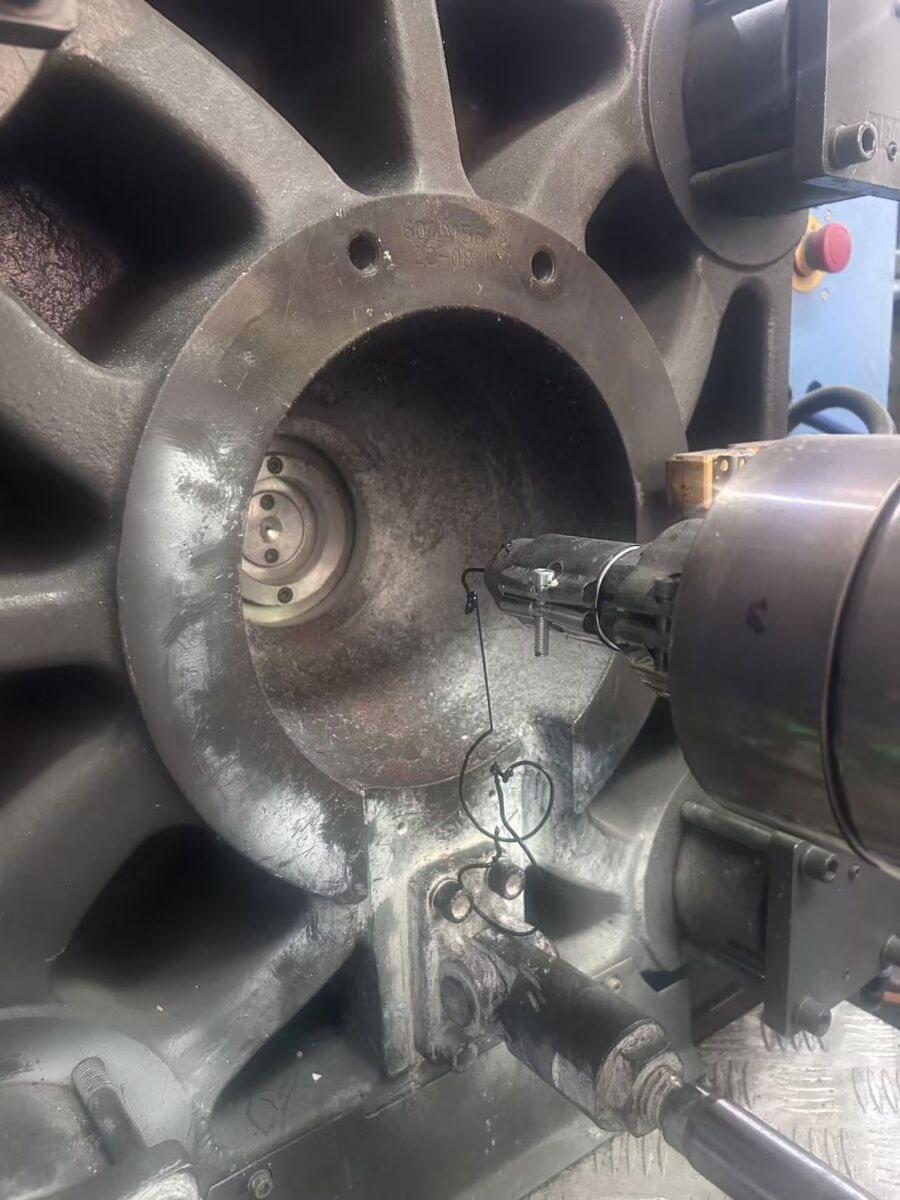
If you are buying tooling from a Chinese supplier, the mold itself needs to pass acceptance before you authorize T1 trials. Here is what a structured mold acceptance covers.
Dimensional and structural checks:
Mold dimensions match the injection machine specifications including tie bar spacing, platen size, and ejector pattern. All cavity and core inserts match drawing dimensions. Parting surface contact area reaches at least 90%. Gaps greater than 0.03 to 0.05 microns on the parting line indicate a sealing problem that will cause flash. Guide pins and bushings operate smoothly with no binding or play. Ejector system operates without sticking, with sufficient stroke to fully eject the part.
Gate and runner system:
Gate location and size match the approved DFM report. For hot runner tools, all hot tips heat evenly with no zones showing temperature deviation greater than 3 degrees C, and no leakage at nozzle seats.
Cooling system:
All cooling circuits are pressure tested at 4MPa for a minimum of 5 minutes with no leakage. Water inlet and outlet temperature difference should not exceed 5 degrees C for standard molds and 2 degrees C for precision molds. All circuits are labeled IN/OUT with sequential numbering such as IN1, OUT1, IN2, OUT2. No iron filings or debris inside cooling channels.
Assembly and packaging:
All mold components are accounted for and match the mold BOM. Mold exterior surfaces are clean and coated with rust preventive. Water and air fittings are sealed and protected. Mold is labeled with mold number, supplier name, and ship date.
Process Parameter Verification: The Quality Problem Most Buyers Never Check
Most Western buyers inspect parts. Very few inspect the process that made them.
This is a critical blind spot. A sample that passes dimensional inspection today may fail in mass production, not because the mold changed, but because the process was never stable to begin with. If your supplier cannot reproduce the same parameters that produced your approved samples, you do not have a validated process.
Why process parameters matter as much as the parts themselves
In traditional injection molding practice, still common in many Chinese factories, process setup is done by an experienced operator who adjusts parameters by feel until parts look right. There is no systematic study of how each parameter affects part quality. The process exists in the operator’s head, not in a document.
The consequences are predictable. Move the job to a different machine and the operator has to start over. Replace the operator and the next person cannot reproduce the setup. Scale from prototype to mass production and the faster cycle times cause shrinkage or warpage that did not appear in sampling. A quality problem occurs and no one can identify what changed because nothing was documented.
This is not a hypothetical risk. It is the most common root cause of quality inconsistency in Chinese injection molding supply chains.
What a process parameter record should contain
Before approving T1 samples for production release, request a complete process parameter sheet. A legitimate record should include the following:
| Parameter | Why It Matters |
|---|---|
| Melt temperature | Affects viscosity, fill behavior, and material degradation |
| Mold temperature | Controls cooling rate, surface finish, and crystallinity |
| Injection speed (mm/s) | Determines shear rate and fill pattern |
| Injection pressure (MPa) | Should not be at or near machine limit |
| V/P switchover position | Critical for consistent fill, should be determined by fill study not guesswork |
| Pack pressure (MPa) | Compensates for shrinkage, should be verified by gate seal study |
| Pack time (s) | Must exceed gate freeze time, confirmed by weight curve |
| Cooling time (s) | Should be verified by ejection temperature testing |
| Screw RPM and back pressure | Affects melt homogeneity and shot-to-shot consistency |
| Cycle time (s) | Total cycle, changes here affect thermal equilibrium of the mold |
The document should include the machine ID, mold number, material lot number, operator name, and date. If it does not, it cannot be used to reproduce the process.
How to evaluate whether the parameters are reasonable
Receiving a parameter sheet is not enough. You need to know whether the numbers make sense. Here are the key questions to ask.
Is injection pressure near the machine limit? If a supplier is running at 90 to 95 percent of the machine’s maximum injection pressure, the mold is struggling to fill. This typically indicates a gate that is too small, a runner that is too restrictive, or a wall thickness that is too thin for the material. Parts may fill at the sample stage but become short shots as the mold ages and flow channels partially block.
Was the V/P switchover position determined systematically? The switchover from velocity control to pressure control should occur when the cavity is 95 to 98 percent full, confirmed by a short-shot fill study, not by the operator’s judgment. A switchover set too early causes inconsistent packing. Too late causes flash and overpacking. Ask your supplier how the switchover position was determined. “We set it until the part looked good” is the wrong answer.
Was pack time verified against gate freeze? Pack time should be set long enough to ensure the gate has frozen before screw recovery begins. The correct method is to run a series of shots at increasing pack times, plotting part weight against time. When weight stabilizes, the gate is frozen. Pack time should be set just past this inflection point. Many factories simply estimate pack time from experience, which leads to dimensional variation as mold temperature fluctuates during production.
Is the cooling time sufficient? Reducing cycle time is the fastest way a factory can increase throughput and reduce cost per part. Cooling time is the easiest parameter to compress. If your supplier’s cycle time is significantly shorter than your own estimate based on wall thickness and material thermal properties, ask for the ejection temperature data that justifies it. Parts ejected too hot will warp after leaving the mold, sometimes hours later, after they have been packed.
The process window concept
A well-developed process should have a defined window, a range of parameter values within which parts consistently meet specification. If parts only pass when parameters are set to an exact point with no tolerance, the process is inherently unstable and will produce defects whenever normal machine variation occurs.
Ask your supplier: “What is your process window for pack pressure on this job?” A supplier running scientific molding principles will be able to answer with specific upper and lower limits and the data that established them. A supplier running on operator experience will not have an answer.
Red flags that indicate an undocumented or unstable process
Supplier refuses to share process parameters, citing them as proprietary. Process parameters belong to your mold and your part. They are not the supplier’s intellectual property.
The parameter sheet has no date, machine ID, or operator signature.
T1 and T2 parameter sheets show significantly different values with no documented explanation of what changed and why.
Supplier cannot explain how pack time or V/P switchover was determined.
Cycle time dropped significantly between T1 and mass production without prior discussion.
What to include in your purchase order
Add a clause requiring the supplier to submit a signed process parameter sheet with every T1, T2, and mass production run. Specify that any parameter change exceeding defined limits, for example plus or minus 5 degrees C on melt temperature or plus or minus 5 MPa on pack pressure, requires written notification and your approval before implementation. This single requirement will immediately distinguish disciplined suppliers from those operating on guesswork.
This is the principle behind scientific molding: replacing operator intuition with documented, data-driven process development that produces a stable, transferable process window.
Dimensional Inspection: What Numbers to Check
A dimensional inspection report is not useful unless you know what you are reading. Here is how to evaluate one.
Critical vs. non-critical dimensions
Not every dimension on a drawing carries equal weight. Critical dimensions, those that affect fit, function, or regulatory compliance, should be checked 100 percent. For a standard production mold, critical dimensions typically account for no more than 10 percent of all drawing dimensions. For precision molds, up to 30 percent.
Measurement methods
The inspection report should specify how each dimension was measured.
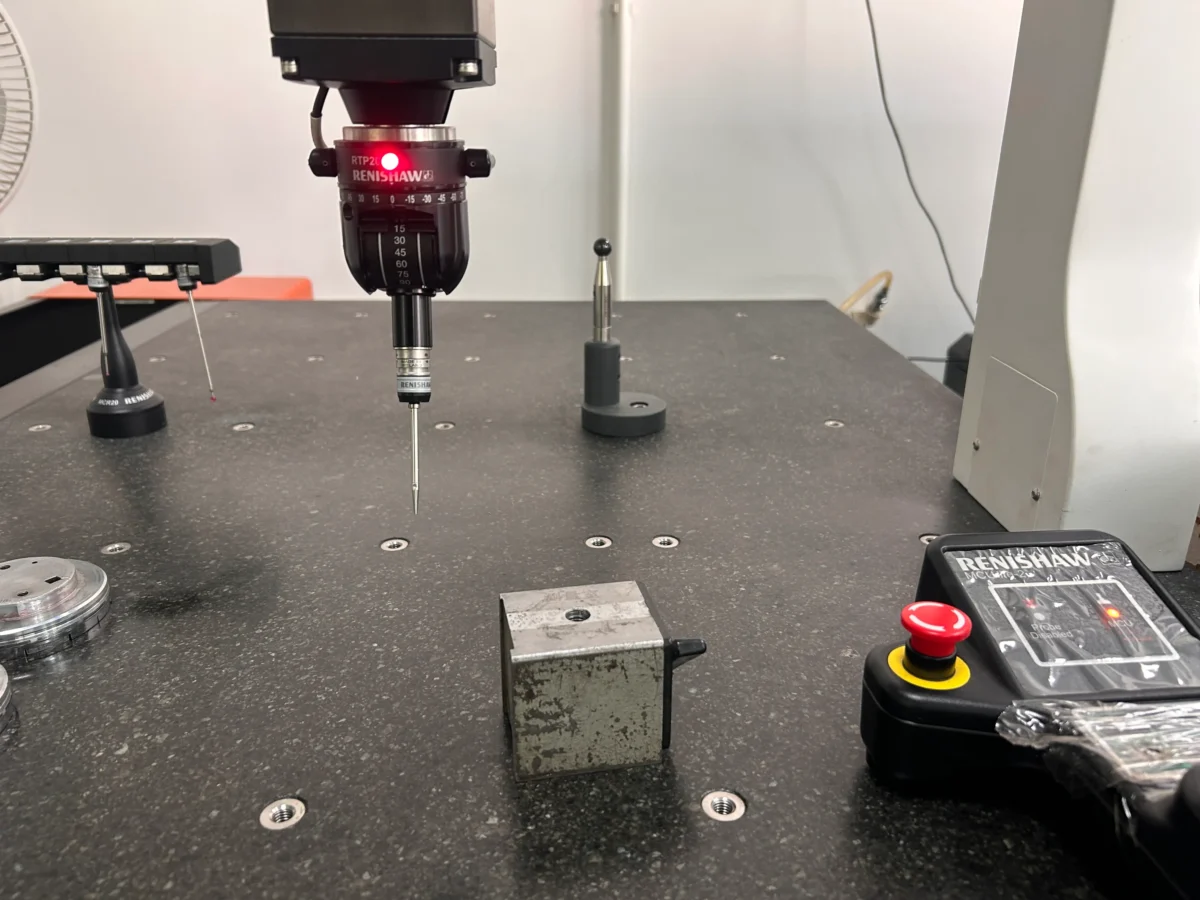
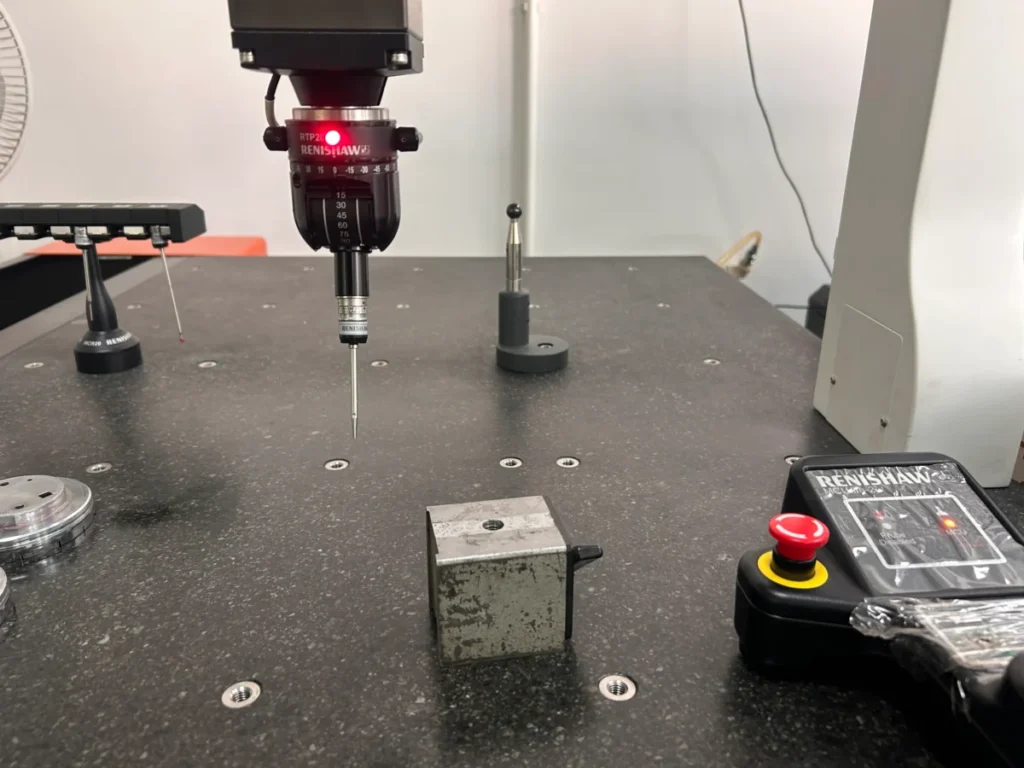
CMM (Coordinate Measuring Machine) offers the highest accuracy and is required for complex 3D features and GD&T callouts. Optical comparator is good for 2D profiles and small features. Caliper and micrometer are acceptable for simple linear dimensions but are operator-dependent.
Be cautious of inspection reports that show only calipers for tight-tolerance features. A tolerance of plus or minus 0.05mm on a functional mating surface should be verified with CMM, not a handheld tool.
Process capability
For high-volume production, ask for Cpk values on critical dimensions. A Cpk of 1.33 or higher means the process is producing within tolerance with a comfortable margin. Cpk below 1.0 means you will see out-of-tolerance parts in production.
Cosmetic Inspection: Surface Quality Standards
Cosmetic acceptance criteria must be defined in writing before production. “Acceptable appearance” means different things to different people. Here is how to specify it clearly.
SPI surface finish standards
The SPI (Society of the Plastics Industry) grading system defines mold surface finish from A-1 (mirror polish) to D-3 (rough sandblast). Specify the required SPI grade on your drawing, not just “smooth” or “textured.”
Common cosmetic defects and acceptance limits
| Defect | What It Looks Like | Typical Acceptance Criterion |
|---|---|---|
| Flash | Thin film of material at parting line | 0.10mm height maximum, no sharp edges |
| Gate vestige | Remnant at gate location | 0.50mm height above surface maximum |
| Sink marks | Depressions on opposite side of ribs or bosses | Not visible under D65 light at 45 degrees |
| Weld lines | Visible line where flow fronts meet | Not permitted in Class A surfaces |
| Warpage | Deviation from flat reference | Measured against fixture, per drawing |
| Short shot | Incomplete fill | Zero tolerance, 100 percent reject |
Define which surfaces are Class A (visible), Class B (functional, semi-visible), and Class C (hidden). Apply different acceptance criteria to each class. A weld line on a hidden bracket surface may be acceptable. The same weld line on a consumer-facing housing is not.
Material Verification: Do Not Just Trust the Certificate
Material certificates can be falsified. This is not speculation. It is a documented problem in low-cost manufacturing supply chains. Here is how to add a layer of verification.
Request the original resin manufacturer’s certificate
The certificate should come from the resin producer such as BASF, LG Chem, or Sabic, not just your molder. It should include the lot number, production date, and material grade. Cross-reference the lot number against the resin producer’s records if the application warrants it.
FTIR testing
Fourier Transform Infrared Spectroscopy is the standard method for verifying polymer identity. A sample from your molded parts can be tested against the reference spectrum for the specified resin. FTIR will detect material substitution such as generic ABS instead of a specified grade, and will identify the presence of excessive regrind. Third-party labs in China and internationally can run FTIR testing for $50 to $150 per sample.
When to require FTIR: medical device components, automotive structural parts, any application where material failure has safety consequences, and when you have had a prior material substitution incident with this supplier.
Simple on-site checks
For non-critical applications, a melt flow index check or basic burn test can reveal obvious material substitution. Experienced engineers can identify ABS, PP, PC, and nylon by flame color, smoke, and char behavior. These are not substitutes for FTIR, but they are a useful screening tool during factory visits.
Documentation Checklist: What to Request Before Final Payment
Do not release final payment until you have received and reviewed all of the following documents.
First Article Inspection Report: full dimensional data, multiple cavities, signed by QC.
Material Certificate: from original resin manufacturer, lot number matching production.
Process Parameter Sheet: documented melt temperature, mold temperature, injection speed, pack pressure, and cycle time.
Pre-Shipment Inspection Report: AQL sampling results with defect details.
Packing List with photos: part count, carton labeling, and packaging photos.
Certificate of Conformance (COC): supplier’s written declaration that parts meet drawing requirements.
Mold Trial Reports T0 through T3: if receiving tooling, all trial reports must be included.
Cooling circuit pressure test record: for new tooling, 4MPa pressure, 5 minutes, no leakage.
Red Flags: Signs Your Supplier Is Cutting Corners
Having spent years in the injection molding industry, these are the patterns that consistently precede quality problems.
They provide photos instead of dimensional reports. Photos show what a part looks like. They do not show whether a 28.5mm dimension is actually 28.5mm. A supplier who resists providing numeric dimensional data is a supplier who does not have it.
T1 samples arrive quickly but T1 reports are delayed. A T1 report that takes weeks to produce after the samples ship usually means the supplier is measuring after the fact to reverse-engineer passing numbers.
The material certificate shows your molder as the issuer. A legitimate material certificate comes from the resin producer. A certificate issued by the molder only confirms that they received material. It does not verify what the material actually is.
They resist third-party inspection. A confident supplier with a functioning quality system welcomes third-party audits. Resistance to inspection almost always means there is something to hide.
Price dropped significantly between quotation and PO. Unexplained price reductions are often recovered through material substitution, reduced cycle time, or reduced inspection frequency.
Should I hire a third-party inspection company?
What AQL level should I use?
Can I do a factory audit remotely?
What happens if defects are found after shipment?
At Qlution Mold, every shipment includes a full dimensional report, material certificate, and process parameter sheet as standard documentation. If you are evaluating suppliers for your next injection molding project, request a quote and we will walk you through our quality documentation process.