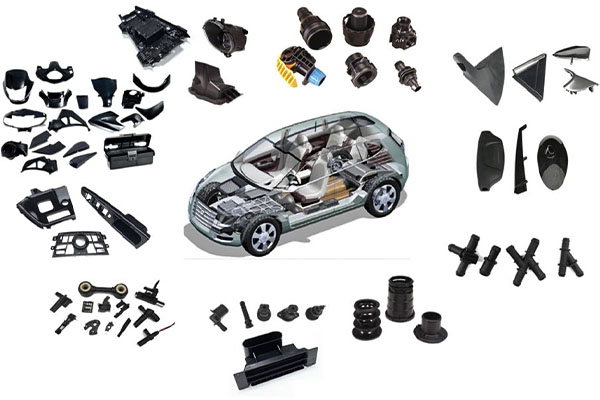
This molding is one of the most widely used manufacturing processes in the world, powering industries from consumer electronics to automotive, aerospace, and medical devices. For beginners entering the field of product development or plastics engineering, understanding how injection molding works and how materials behave under heat, pressure, and cooling is essential.
This guide explains the full process, material options, performance considerations, and the factors that influence part quality, cost, and long-term durability. Whether you’re designing your first molded component or optimizing an existing product, learning the fundamentals of this molding gives you the technical confidence to bring ideas to life efficiently and at scale.
What Is Injection Molding?
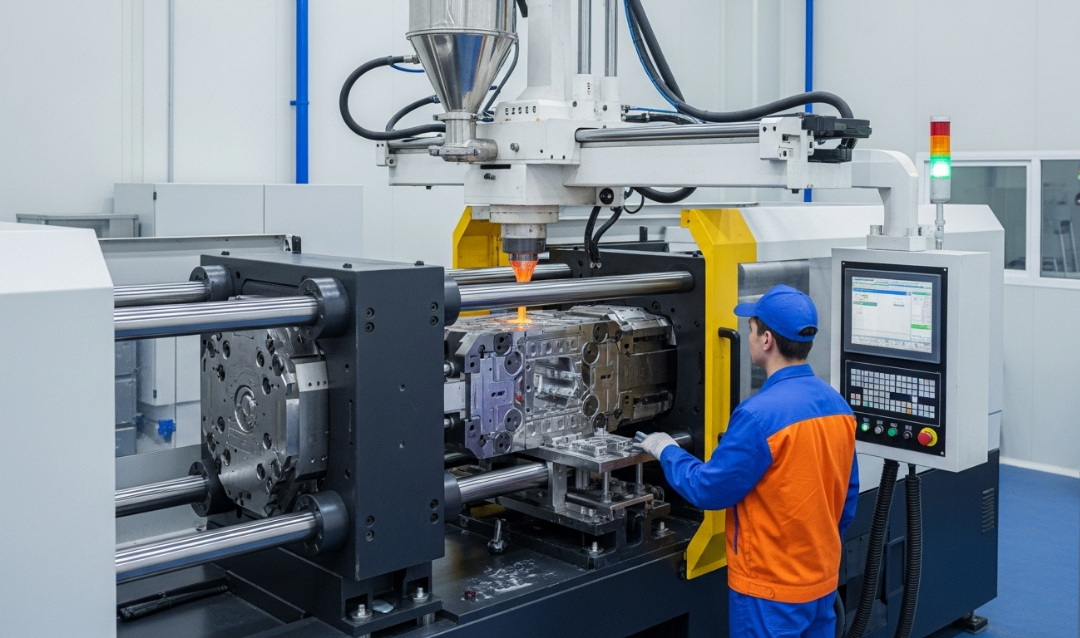
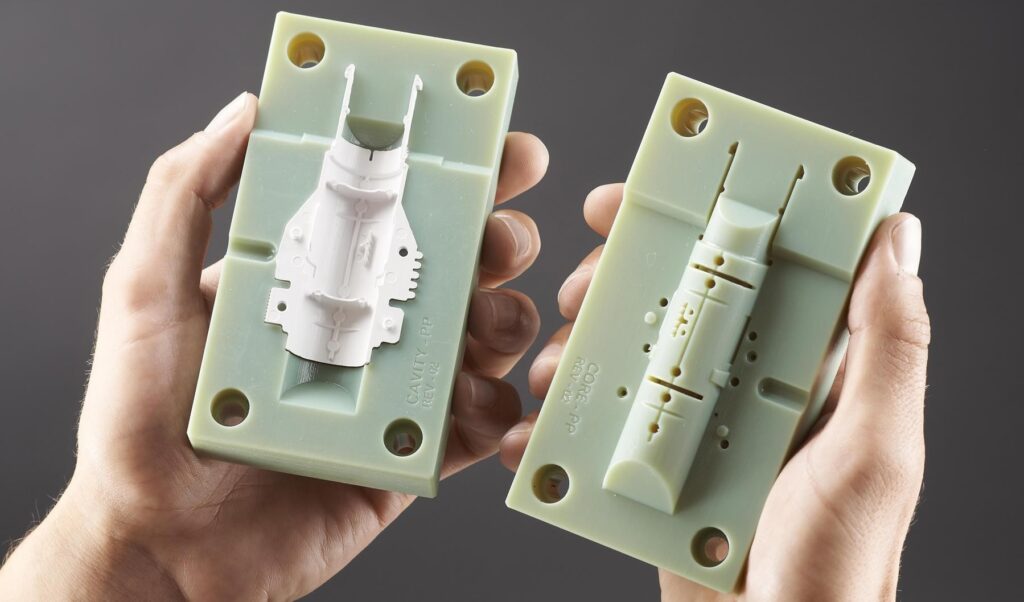
Injection molding is a high-volume manufacturing process in which molten plastic is injected into a metal mold under pressure, allowed to cool, and then ejected as a finished part. Because the process is fast, repeatable, and compatible with countless polymers, it remains the go-to solution for mass-producing durable, dimensionally accurate plastic components.
The process involves four major steps: melt, inject, cool, and eject, which work together to achieve tight tolerances and consistent mechanical performance. With the right mold design, the right machine setup, and the right material selection, it can produce complex shapes that would otherwise be impossible or too expensive to create using subtractive manufacturing.
Materials:
Material choice is one of the most important decisions in Injection Molding, directly influencing part strength, durability, manufacturability, and cost. Beginners must understand the differences between types of these materials, including amorphous and semicrystalline polymers, engineering-grade compounds, elastomers, and high-temperature resins. Common choices include ABS, polypropylene, polyethylene, nylon, polycarbonate, acetal, and TPEs.
Engineers also consider thermoplastics used in Injection Molding, since thermoplastics soften when heated and harden when cooled, making them ideal for repeated processing. For applications requiring higher mechanical performance, engineering plastics for molding, such as PA66, PBT, PC-ABS, and POM, offer enhanced strength, better temperature resistance, and improved chemical stability. Ultimately, material selection for Injection Molding depends on the application: mechanical loads, thermal conditions, regulatory requirements, environmental exposure, aesthetics, and end-use performance expectations
Key Material Properties to Consider
Every plastic behaves differently during molding, and understanding the properties of molding materials is crucial for designing successful parts. Shrinkage, melt viscosity, crystalline structure, moisture absorption, and cooling rate all impact how a part fills the mold and how it performs after ejection. For temperature-sensitive applications, designers evaluate the heat resistance of plastics, including HDT, UL RTI, and continuous-use temperatures. In chemically aggressive environments, oils, cleaners, and sterilization chemicals, engineers assess the chemical resistance of polymers to prevent stress-cracking and premature failure in the field.
Impact-heavy environments require materials with high impact strength and durability, such as PC, ABS, and modified nylons, which can withstand dynamic loads without cracking. As environmental responsibility grows, many companies also consider biodegradable injection molding materials like PLA or bio-based polyesters to reduce carbon footprint while maintaining adequate performance for consumer products.
How the Injection Molding Process Works?
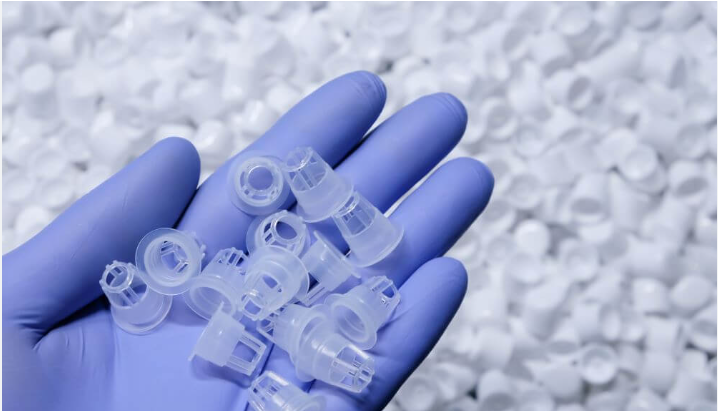
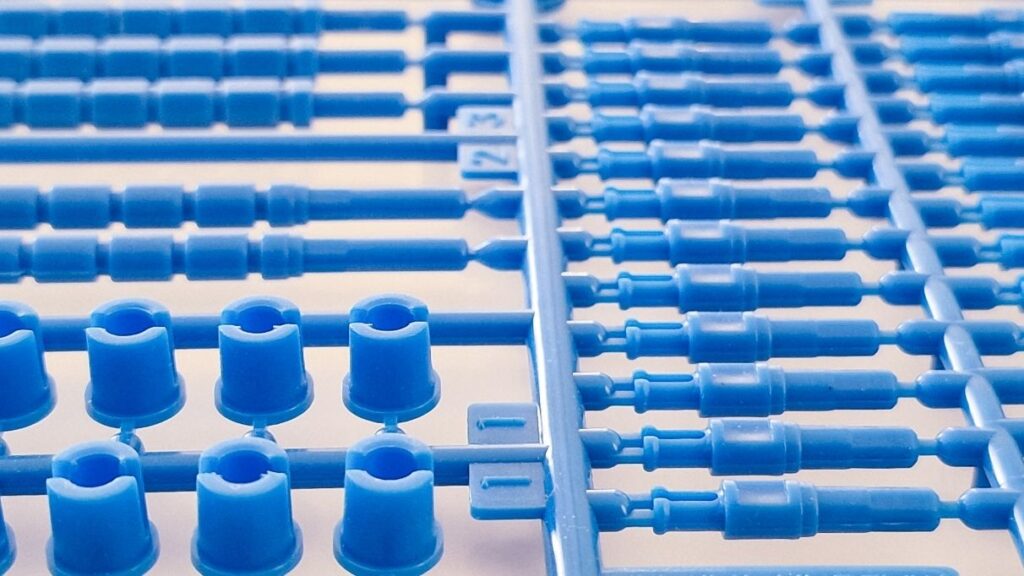
Although injection molding machines vary in design, the overall process is consistent. Plastic pellets are fed through a hopper into a heated barrel, where they melt and are homogenized by a reciprocating screw. Once the molten resin reaches the correct viscosity and melt temperature, it is injected into the mold cavity at high pressure. The mold remains clamped shut until the material cools, solidifies, and gains enough rigidity for ejection.
Cycle time depends on material selection, mold complexity, gate design, wall thickness, and cooling efficiency. Proper mold temperature control, uniform wall thickness, draft angles, and balanced runners help ensure dimensional stability and reduce warpage or sink marks. As a beginner, understanding how molten plastic flows inside a mold is foundational to achieving consistent, repeatable results in production.
Understanding Common Molding Materials
Each material offers unique advantages depending on the application:
- ABS: Good impact resistance, moderate cost, and excellent surface finish. Widely used in electronics housings.
- PC (Polycarbonate): High transparency and exceptional toughness; suitable for safety products and optical components.
- PP (Polypropylene): Lightweight, fatigue-resistant, and chemically stable; ideal for automotive, medical, and packaging.
- Nylon (PA): High mechanical strength, low friction, and excellent wear properties; commonly used in gears and mechanical parts.
- TPE/TPU: Elastomeric materials for flexible components like grips, gaskets, and seals.
- POM (Acetal): Low friction and excellent dimensional stability; ideal for moving mechanical assemblies.
- PEEK, PEI, PPSU: High-performance polymers for high-temperature or demanding environments.
Advanced resins such as glass-filled nylon 6/6 (PA66 GF) provide a strength-to-weight ratio close to aluminum, making them ideal for structural components. High-temperature engineering plastics used in extreme environments often involve comparisons like PEEK vs PEI vs PPSU, ensuring that the right resin is chosen for thermal cycling, chemical exposure, or sterilization.
The Role of Thermal and Mechanical Performance
Thermoplastic behavior under stress and temperature is essential to design validation. Engineers evaluate parameters like DTUL, HDT, elongation at break, and flexural modulus. Some materials soften at the Vicat softening temperature plastics rating, which helps determine whether a part will deform under heat during use.
Flow behavior is equally important. The melt flow rate (MFR) in injection molding indicates how easily resin flows into thin-wall sections. High MFR materials are excellent for intricate geometries, while lower MFR versions provide superior mechanical properties. Additionally, environmental exposure may cause environmental stress cracking (ESC), a failure mode triggered by the combination of stress, time, and chemical agents. Selecting the right resin helps prevent cracking, brittleness, and unexpected part failure.
Impact, Toughness, and Long-Term Reliability
Application-driven decisions often depend on toughness, durability, and fatigue resistance. For example, consumer electronics require drop resistance, automotive parts must withstand vibration, and medical devices need sterility and dimensional accuracy.
Testing metrics such as notched Izod impact resistance help predict whether a material will fracture under sudden load. Beginners must understand that impact performance varies depending on polymer type, fillers, processing temperatures, and part geometry. With the growing push for high-performance plastics, many industries turn to reinforced materials, elastomers, and composites to improve stiffness, elongation, and overall product longevity.
The Economics of Material Choice:
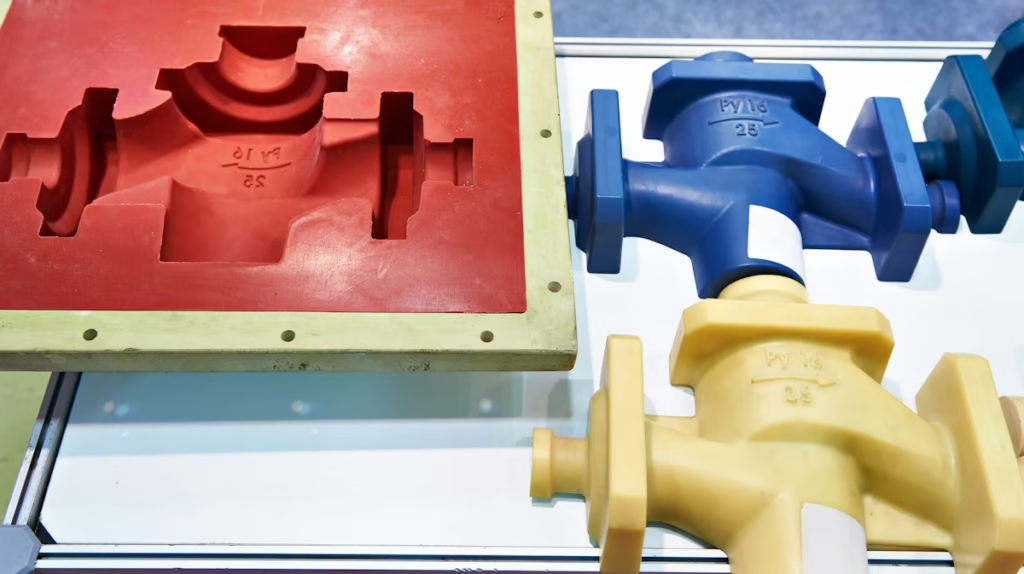
Finally, design for manufacturability requires engineers to evaluate the cost comparison of molding resins. Material cost can vary dramatically, from low-cost, high-volume PP and PS to premium engineering resins like PC-ABS, PBT, or specialty thermoplastics. The best material balances performance, moldability, regulatory compliance, and lifecycle cost.
Lower-cost options are ideal for consumer goods, while high-performance applications, medical, aerospace, and automotive, justify more expensive resins with better long-term stability. Beginners must learn that material cost is only one factor; cycle time, scrap rate, tooling complexity, and secondary operations also influence total manufacturing cost.
Conclusion:
Injection molding remains the backbone of modern manufacturing, enabling companies to scale production with speed, consistency, and remarkable design freedom. A strong understanding of materials, part design, flow behavior, and processing parameters gives beginners the foundation needed to make informed engineering decisions. Because every resin behaves differently, material selection becomes a strategic process shaped by temperature limits, chemical exposure, mechanical performance, and long-term reliability.
By exploring how polymers respond to heat, stress, impact, and environmental conditions, beginners gain the insight needed to optimize part durability and manufacturability. Whether you are designing consumer products, automotive components, or medical devices, mastering its principles empowers you to bring high-quality plastic parts from concept to production with confidence and precision.