The modern automotive industry depends heavily on advanced plastics, and no process supports this shift better than automotive injection molding. As vehicles evolve toward lighter, safer, and more efficient designs, manufacturers increasingly choose molded plastic components over traditional metal parts. This shift isn’t just about reducing cost; it’s about achieving higher precision, better durability, improved aesthetics, and greater design flexibility across both interior and exterior vehicle systems.
Today’s cars contain dozens of molded components, from dashboard structures and door trims to bumper housings and under-the-hood parts engineered for heat and chemical resistance. The scalability of injection molding allows automotive brands to mass-produce complex geometries with consistent quality and tight tolerances, something essential for safety-critical applications. Whether it’s electric vehicles, luxury interiors, or high-performance engine systems, injection molding continues to play a pivotal role in shaping the future of automotive manufacturing.
What Is Automotive Injection Molding?
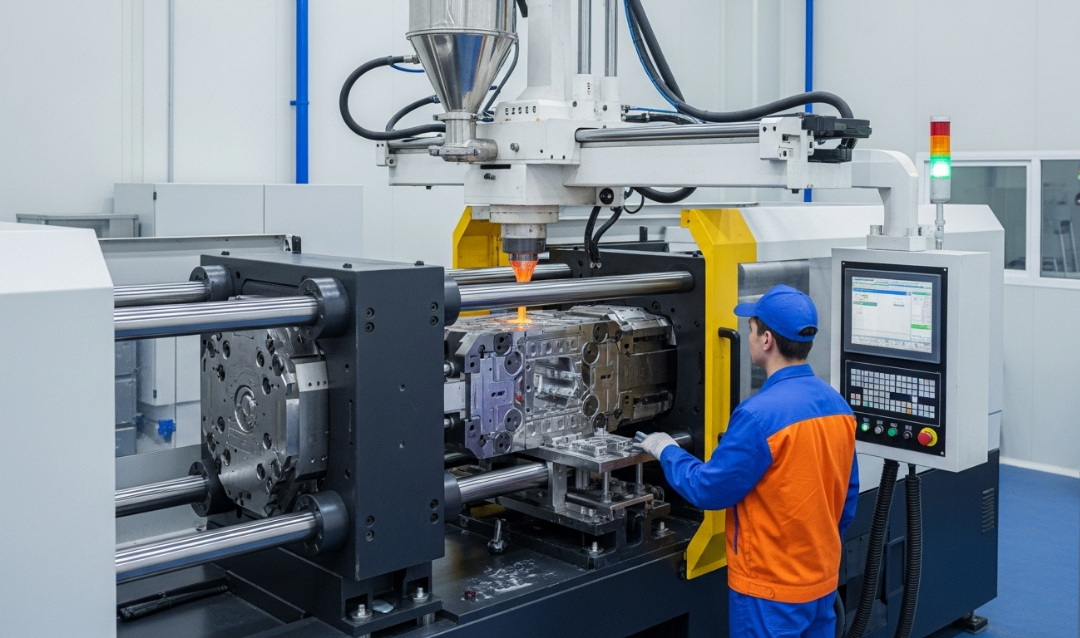
Automotive injection molding is a high-precision manufacturing process used to produce complex plastic parts for vehicles on a large scale. In this method, molten polymer is injected into a carefully engineered mold cavity, cooled, and then ejected as a finished component. The process allows automakers to create parts with intricate shapes, tight tolerances, and consistent performance, qualities that are essential for both safety and aesthetics. This technique is used to manufacture a wide range of functional and structural components across the vehicle.
From dashboard frames and air-conditioning vents to bumper elements and electrical housings, molded parts offer excellent repeatability and durability. Because the entire cycle is automated, injection molding delivers rapid production speeds, making it ideal for high-volume automotive manufacturing where reliability and cost control are critical. By combining advanced polymers, precision tooling, and modern automation, the injection molding process has become the backbone of plastic component production in the automotive sector.
Automotive Plastic Components and Common Injection Molded Car Parts
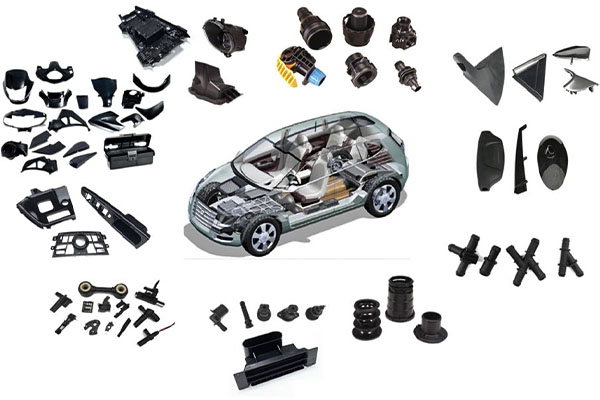
The rise of advanced polymers has transformed how vehicles are designed, and today, automotive plastic components are used in nearly every part of a car. Injection molding enables manufacturers to replace heavier metal parts with engineered plastics that offer the same or better performance at a fraction of the weight. This shift supports both fuel efficiency and production efficiency, making plastics a strategic choice for modern automotive engineering. Many injection-molded car parts appear in critical interior systems, including dashboards, center consoles, door panels, cup holders, air vents, glove boxes, and instrument clusters.
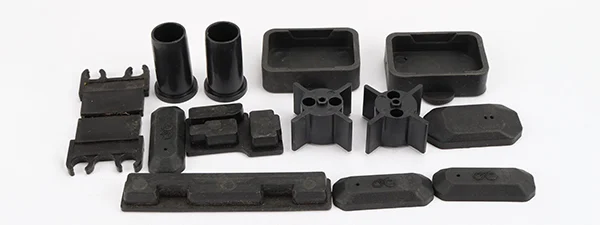
These components require precision, texture consistency, and high-quality surface finishes, all of which injection molding delivers reliably. On the exterior, molding is used to produce bumpers, grilles, mirror housings, lamp covers, fender liners, and aerodynamic trims. Under the hood, molded plastics support fluid reservoirs, battery casings, cable connectors, and various brackets that must withstand heat, chemicals, and vibration. Because molding offers design flexibility and dimensional accuracy, automotive manufacturers continue expanding the use of plastic components to enhance performance while reducing cost and overall vehicle weight.
Materials Used in Automotive Molding
The performance of automotive injection molding depends heavily on selecting the right polymer for each component. Different areas of a vehicle face heat, vibration, chemical exposure, and mechanical stress, so material choice directly affects durability and safety. Automotive manufacturers use a wide range of engineered resins, each offering unique strengths tailored to interior, exterior, and under-the-hood applications.
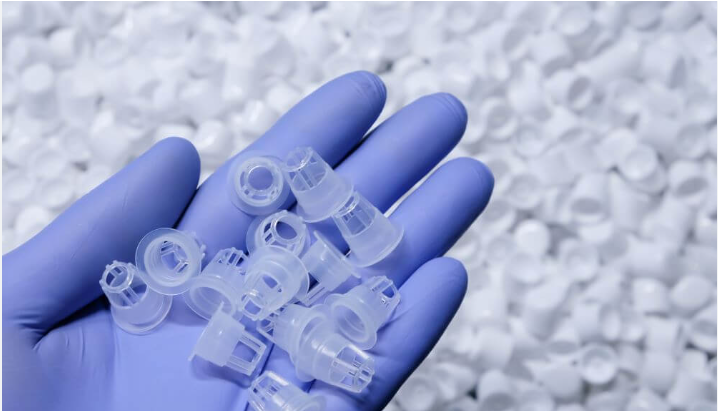
Common materials include polypropylene (PP) for interior trims, ABS for dashboard structures, nylon (PA) for mechanical components, polycarbonate (PC) for lighting housings, and POM for precision moving parts. Thermoplastic elastomers (TPE) and TPU are frequently moldable for soft-touch surfaces and sealing applications. For high-performance environments such as engine compartments, high-performance polymers for cars like PPS, PEEK, and reinforced nylon blends offer excellent heat stability, chemical resistance, and mechanical strength.
Lightweight Automotive Plastics & Their Benefits
One of the biggest reasons automotive injection molding has become indispensable is the industry-wide push toward lighter vehicles. Lightweight automotive plastics play a central role in improving fuel efficiency, reducing emissions, and extending the driving range of electric vehicles. Replacing metal components with engineered polymers allows automakers to cut weight without sacrificing strength, durability, or safety. Plastics such as PP, ABS blends, reinforced nylon, and PC can deliver excellent structural performance while being significantly lighter than steel or aluminum. This weight reduction improves acceleration, braking efficiency, and overall handling.
In EVs specifically, every kilogram saved contributes to increased battery range, making lightweight plastics a strategic advantage for modern vehicle engineering. Beyond weight savings, these materials also offer corrosion resistance, improved manufacturability, and greater design freedom. Complex geometries, integrated features, and functional textures can be molded directly into the part, eliminating secondary operations. As sustainability goals and EV adoption continue to rise, lightweight polymers will remain essential for meeting performance and regulatory requirements in the automotive sector.
Advantages of Automotive Injection Molding
The widespread use of automotive injection molding is driven by its ability to deliver high-quality, consistent parts at a scale the automotive industry demands. One of the major advantages of automotive molding is precision. The process allows manufacturers to reproduce complex geometries with tight tolerances, ensuring every component, from dashboard panels to under-the-hood brackets, fits perfectly within the vehicle assembly. Durability is another key advantage. Injection-molded plastics can be engineered to withstand heat, chemicals, vibration, and long-term wear, making them reliable for both interior and exterior environments.
The method also supports high-volume production with minimal variation, which is essential for global automotive platforms producing millions of vehicles annually. Cost efficiency further strengthens injection molding’s value. Once the mold tooling is created, each part can be produced rapidly and at a low per-unit cost. Integrated features such as clips, hinges, textures, and structural ribs can be molded directly into the part, reducing assembly steps and overall manufacturing expenses. Combined with aesthetics, consistency, and scalability, injection molding remains the backbone of modern automotive component production.
Automotive Mold Design & Cost Efficiency in Manufacturing
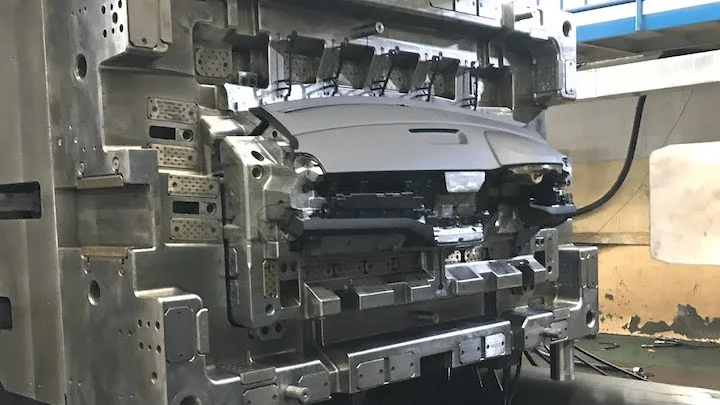
Successful automotive injection molding depends heavily on well-engineered tooling because the mold determines part accuracy, production speed, and long-term reliability. Effective automotive mold design focuses on optimizing gate placement, wall thickness, cooling channels, venting, and rib structures to ensure parts fill evenly and maintain dimensional stability. Designers must also account for mechanical loads, temperature fluctuations, and surface finish requirements, especially for visible interior trims and exterior components exposed to the elements. A well-designed mold directly contributes to cost efficiency in automotive manufacturing.
High-quality tooling may require a larger upfront investment, but it significantly reduces scrap rates, cycle times, and maintenance issues over millions of production cycles. Features like automated sliders, multi-cavity layouts, and hot runner systems help manufacturers produce large volumes of parts quickly and consistently. By reducing material waste, improving cooling efficiency, and enabling fully automated production lines, optimized mold design becomes one of the most effective ways to lower long-term manufacturing costs.
Future Trends in Automotive Molding
As the automotive industry rapidly evolves, automotive injection molding continues to adapt to new materials, technologies, and production demands. One of the most significant trends is the rise of electric vehicles (EVs), which require lighter components, improved thermal management, and advanced electrical insulation. Manufacturers are increasingly turning to engineered composites, bio-based resins, and future trends in automotive molding that focus on sustainability and recyclability.
Automation and AI-driven process optimization are also reshaping how injection molding is executed. Smart molding systems can monitor temperature, pressure, flow, and part quality in real time, reducing defects and improving consistency across global production lines. Additionally, metal-to-plastic conversion will accelerate as high-strength polymers replace heavier metal components, especially in structural and under-the-hood applications.
Conclusion
The role of automotive injection molding in modern vehicle manufacturing is impossible to overlook. As cars become lighter, smarter, and more efficient, injection molding provides the precision, scalability, and material performance needed to meet today’s engineering and production standards. From interior trims and exterior housings to structural brackets and fluid-handling parts, molded plastics deliver the strength, durability, and design flexibility that automotive brands rely on.
With the rise of electric vehicles, lightweight polymers, and advanced molding technologies, the future of automotive production will lean even more heavily on engineered plastics and high-performance tooling. Companies that invest in the right materials, optimized mold design, and innovative molding techniques will continue to gain a competitive edge. Ultimately, injection molding remains a cornerstone of automotivengineering, supporting safety, efficiency, and innovation across every generation of vehicles.