When engineers compare common thermoplastics, ABS vs polypropylene is one of the most frequent matchups. Both materials are widely used, cost-effective, and versatile, but they behave very differently once molded into real-world products. Understanding these differences is essential for designers, buyers, and manufacturers who need the right balance of strength, durability, chemical resistance, and long-term performance. ABS is known for its rigidity, impact strength, and premium surface finish, making it a favorite for structural and cosmetic parts.
Polypropylene, on the other hand, stands out for its flexibility, fatigue resistance, and excellent chemical stability, especially in environments exposed to moisture or harsh substances. Because so many industries, automotive, consumer goods, medical devices, packaging, and electronics, depend on these materials, choosing between them directly affects cost, performance, and product lifespan. This guide breaks down how each material behaves, where it performs best, and how to decide which one truly fits your product requirements.
ABS vs Polypropylene: Core Material Overview
At a basic level, comparing ABS vs polypropylene means looking at two plastics that serve very different engineering purposes. ABS (Acrylonitrile Butadiene Styrene) is a tough, rigid thermoplastic valued for its structural strength and ability to hold tight tolerances. It delivers a smooth, high-quality surface finish, making it ideal for parts that must look and feel premium. Polypropylene (PP), however, is a semi-crystalline polymer prized for flexibility, fatigue resistance, and exceptional chemical stability. Its lightweight nature and ability to withstand repeated bending make it a go-to choice for living hinges, containers, and components exposed to moisture.
ABS excels when stiffness, impact strength, and dimensional accuracy are required, while PP dominates in applications demanding chemical resistance, low density, and long-term durability in corrosive environments. While both materials are easy to mold and cost-effective, their distinct performance profiles make them suitable for entirely different product categories. Understanding these foundational differences helps clarify material selection early in the design process.
ABS Plastic Properties Explained
To understand how ABS performs in demanding applications, it’s important to look closely at key ABS plastic properties. ABS vs polypropylene is well known for its exceptional stiffness and impact resistance, thanks to its unique blend of acrylonitrile, butadiene, and styrene. This combination gives ABS a strong internal structure that maintains shape under load and resists cracking when subjected to sudden force. Its dimensional stability is one of its biggest advantages; parts molded in ABS tend to hold tight tolerances, making it suitable for assemblies that require precision.
Another standout feature is surface finish. ABS delivers a smooth, high-quality texture that accepts paint, coatings, or plating with ease. This makes it ideal for visible components in consumer electronics, automotive interiors, and appliance housings. Additionally, ABS performs well in low to moderate temperatures, offering reliable strength without becoming brittle. For designers seeking a rigid, durable plastic with excellent aesthetics, ABS remains a proven and reliable choice.
Polypropylene Plastic Properties Explained
When evaluating plastics for flexibility, chemical stability, and long-term performance, polypropylene plastic properties stand out clearly. PP is a semi-crystalline thermoplastic known for its lightweight structure and exceptional fatigue resistance. This is why it’s commonly used for living hinges, snap-fit features, and components that require repeated bending without cracking. Its low density also makes it one of the lightest commercial plastics, helping manufacturers reduce overall part weight without sacrificing durability.
Chemical resistance is where polypropylene truly excels. It can withstand exposure to acids, bases, solvents, oils, and moisture far better than most engineering plastics, making it ideal for food containers, chemical packaging, medical devices, and automotive fluid-handling components. PP’s inherent moisture resistance ensures that the material will not absorb water or swell, even in harsh environments. Although it is less rigid than ABS, its toughness, flexibility, and corrosion resistance make polypropylene a highly reliable option for applications where environmental stability and longevity matter most.
“Unsure which material performs better for your application? Prototype injection molding lets you test both with real production conditions.”
Key Difference Between ABS and Polypropylene
When comparing these materials, the most important difference between ABS vs polypropylene comes down to rigidity versus flexibility. ABS is a strong, stiff engineering plastic designed for parts that need structural strength, precise detailing, and a high-quality finish. Its toughness and dimensional stability make it ideal for products that must hold tight tolerances or endure mechanical stress. Polypropylene, in contrast, is far more flexible and resistant to fatigue, allowing it to bend repeatedly without cracking, something ABS cannot handle.
Their chemical behavior also separates them. PP offers superior resistance to chemicals, moisture, and solvents, while ABS is more sensitive to corrosive environments. On the processing side, ABS delivers a premium appearance and can be painted or plated, whereas PP is harder to bond, paint, or adhere to due to its low surface energy. In short, ABS is chosen for rigidity and aesthetics, while PP is preferred for flexibility, chemical performance, and long-term durability in harsh conditions.
ABS vs PP Strength Comparison
Here’s a clear, engineering-focused table comparing the strength characteristics of ABS vs polypropylene so designers can quickly evaluate performance differences:
| Strength Factor | ABS | Polypropylene (PP) |
| Tensile Strength | High tensile strength; maintains rigidity under load. | Moderate tensile strength; more flexible under stress. |
| Impact Resistance | Excellent impact resistance, especially in low temperatures. | Good impact resistance, but not as strong as ABS in cold environments. |
| Flexural Strength | Very high; resists bending and deformation. | Lower; designed to flex rather than resist bending. |
| Stiffness | Extremely stiff and rigid, ideal for structural parts. | Flexible and able to bend repeatedly without breaking. |
| Fatigue Resistance | Moderate fatigue resistance; not suitable for repeated flexing. | Outstanding fatigue resistance, perfect for living hinges and snap-fit parts. |
| Dimensional Stability | Excellent dimensional accuracy and tight tolerance control. | Moderate stability; can deform more under long-term stress. |
| Best Use Cases | Structural housings, mechanical parts, precision components. | Hinges, clips, containers, and chemically exposed parts. |
ABS vs PP Durability for Real-World Applications
Durability plays a major role when choosing between ABS vs polypropylene, especially for products expected to withstand long-term mechanical, environmental, or chemical stress. ABS is well-regarded for its impact resistance and structural rigidity, making it a durable option for components that must resist cracking, deformation, or heavy handling. It performs reliably in indoor environments, consumer electronics, automotive interiors, and applications where consistent dimensional stability is essential.
Polypropylene, however, offers a different type of durability, one rooted in flexibility, chemical resistance, and fatigue strength. PP can handle repeated bending, exposure to corrosive substances, and varying humidity levels without degrading. This makes it ideal for packaging, fluid-handling parts, laboratory components, and outdoor products that encounter moisture or chemicals. While ABS excels in rigidity and surface durability, PP thrives in conditions where flexibility, corrosion resistance, and long-term environmental stability are more critical.
ABS vs PP Chemical Resistance
Chemical performance is one of the clearest areas where ABS vs polypropylene behaves very differently. ABS provides moderate resistance to chemicals but is vulnerable to strong acids, bases, and many organic solvents. Exposure to these substances can cause surface damage, swelling, or weakening of the polymer structure. This limits ABS in environments where corrosive materials, aggressive cleaners, or industrial fluids are present.
Polypropylene, on the other hand, is widely recognized for its exceptional ABS vs PP chemical resistance performance. PP stands up extremely well to acids, alkalis, alcohols, detergents, and many solvents, making it a trusted choice for laboratory equipment, chemical containers, automotive fluid systems, and medical components. It also resists moisture absorption, which adds another layer of environmental stability. For any application involving chemical exposure, PP is almost always the safer and more reliable material compared to ABS.
ABS vs PP Temperature Resistance
Temperature performance is another key factor when comparing ABS vs polypropylene, especially for products exposed to heat, cold, or rapid temperature changes. ABS offers better high-temperature resistance, maintaining strength and rigidity at elevated operating temperatures. Its heat deflection temperature is significantly higher than PP, making ABS suitable for automotive interior parts, electronic housings, and components that may encounter warm environments or intermittent heat loads.
Polypropylene performs differently. While PP can handle moderate heat, it softens more quickly and has a lower melting point, which limits its use in high-temperature applications. However, PP excels in cold environments; its flexibility and impact resistance remain stable even at lower temperatures, where ABS may become brittle. For applications requiring heat resistance, ABS is typically the preferred choice; for cold performance or temperature cycling in chemical settings, PP often delivers better long-term reliability.
ABS vs PP Cost Comparison
When cost-efficiency is a deciding factor, comparing ABS vs polypropylene shows a clear advantage for PP in most cases. Polypropylene is one of the most economical engineering plastics available, thanks to its low raw material cost, widespread availability, and highly efficient processing characteristics. Manufacturers benefit from shorter cycle times, lower material density, and reduced part weight, all of which contribute to overall cost savings in large production runs.
ABS, while still affordable, generally comes at a higher price point due to its enhanced mechanical strength, rigidity, and superior surface finish. It also tends to have slightly longer cycle times during molding because of its higher processing temperature and greater cooling requirements. For projects where structural strength, tight tolerances, or a premium appearance are necessary, the additional cost of ABS is often justified. However, when cost, chemical resistance, and lightweight performance are the priorities, polypropylene typically delivers a better value-to-performance ratio.
ABS vs PP Applications Across Industries
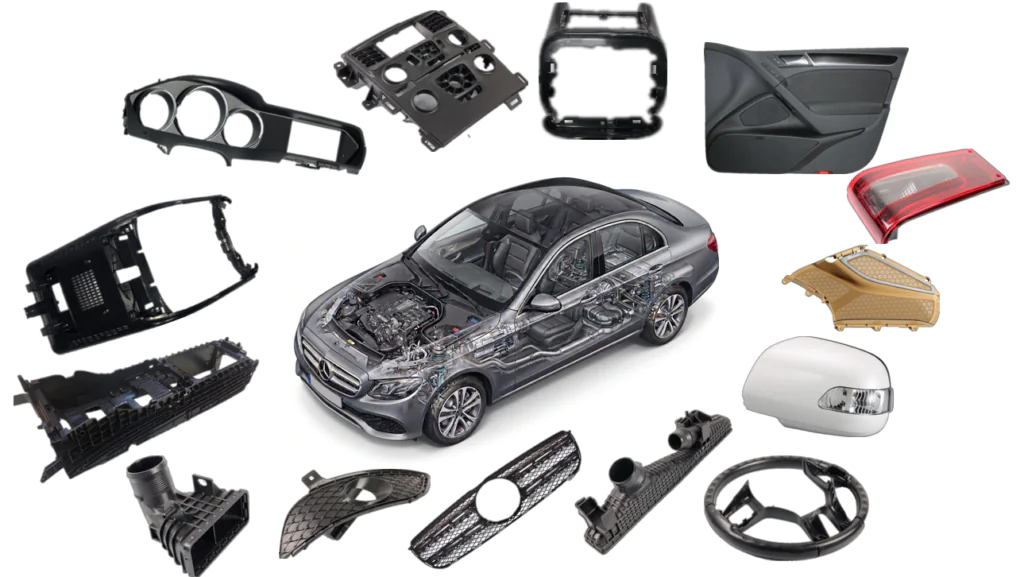
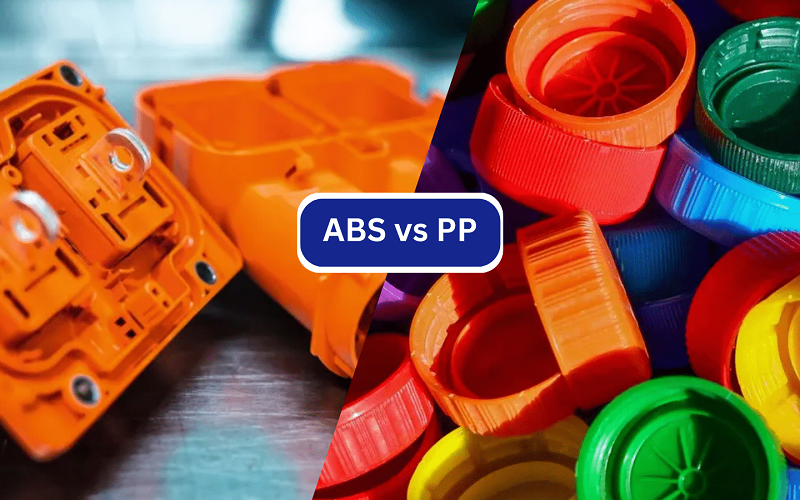
Across manufacturing sectors, comparing ABS vs polypropylene helps clarify where each material naturally excels. ABS is widely used in industries that demand rigidity, precision, and a high-quality aesthetic finish. Consumer electronics rely on ABS for housings, remote controls, keyboard components, and protective casings. Automotive interiors use it for dashboard panels, trim pieces, and structural clips where stiffness and dimensional accuracy matter. Its paintability and smooth finish also make ABS ideal for appliance covers, power tool housings, and premium consumer products.
Polypropylene finds its strength in environments where flexibility, chemical resistance, and low moisture absorption are essential. You’ll see PP used extensively in packaging, medical supplies, storage containers, automotive fluid reservoirs, and components exposed to oils, detergents, or corrosive substances. Its ability to withstand repeated bending also makes it the go-to material for living hinges, snap-fit lids, and reusable household goods. Ultimately, while ABS dominates structural and cosmetic applications, PP leads in chemical-heavy, moisture-rich, and high-flex situations.
Which Is Better, ABS or Polypropylene?
Deciding between ABS vs polypropylene depends entirely on the demands of your application rather than a single “better” material. ABS is the stronger choice when you need rigidity, structural integrity, tight tolerances, and a premium surface finish. It performs exceptionally well in consumer electronics, automotive interiors, appliance housings, and any product that must combine strength with visual appeal. If your design requires stiffness and dimensional accuracy, ABS is typically the superior option.
Polypropylene excels in a different set of conditions. PP is better when flexibility, chemical resistance, moisture stability, and long-term fatigue performance are priorities. It outperforms ABS in environments involving corrosive substances, repeated bending, and continuous exposure to humidity or liquids. For packaging, medical components, storage containers, living hinges, and chemical-handling parts, PP is usually the more reliable and cost-efficient material.
Conclusion
Choosing between ABS vs polypropylene comes down to identifying what your product needs most: rigidity or flexibility, aesthetics or chemical resistance, structural strength or long-term environmental durability. ABS delivers superior stiffness, impact strength, and a premium finish, making it ideal for precision housings, automotive interiors, and consumer electronics. Polypropylene, however, excels in corrosion resistance, fatigue strength, and moisture stability, making it the better option for chemical containers, medical components, packaging, and parts requiring repeated bending.
Neither material is universally better; each dominates in different engineering scenarios. By understanding their strengths, limitations, and real-world performance, designers and manufacturers can confidently choose the material that delivers cost-efficiency, longevity, and optimal performance for the intended application.