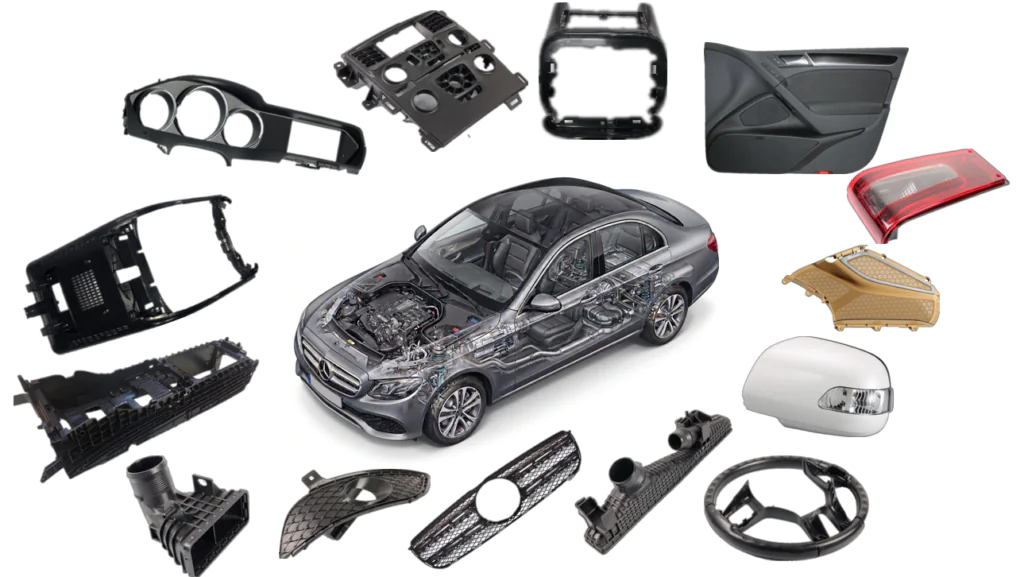

Injection mold components form the structural and functional core of every plastic molding operation, determining how efficiently, consistently, and precisely a molded part can be produced. Whether manufacturing automotive connectors, consumer electronics, or medical housings, the quality of injection mold components directly influences part accuracy, cycle time, durability, and total production cost. Competitive analysis from leading mold manufacturers shows that understanding the parts of an injection mold is critical before designing any plastic project, especially when optimizing tooling for high-volume production or thermoplastic materials.
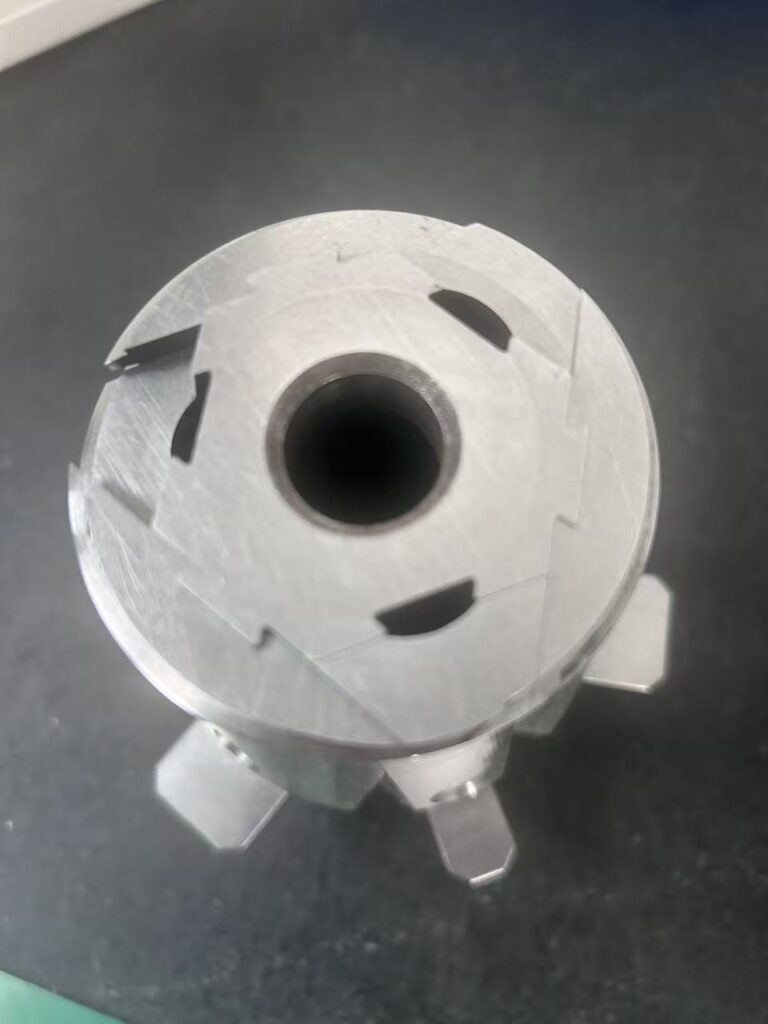
Today’s industrial molds are far more advanced than simple steel blocks; they incorporate precision machining, cooling circuits, mechanical ejection systems, venting networks, flow distribution channels, structural reinforcements, and alignment mechanisms. This guide provides a full technical breakdown of each component, its purpose, and its design relationships so engineers and product developers can better understand injection mold design and function. From the mold base and cavity system to the core and cavity in injection molding, the injection mold cooling system, nozzle and sprue bushing design, ejector pins and runner system, venting system in injection molding, mold interlocks and guiding pins, and materials for injection mold parts, every element plays a crucial role in maintaining high-quality production.
What Are Injection Mold Components?
Injection mold components are the mechanical and structural elements inside an injection mold that shape, fill, cool, and eject a plastic part. They work together under extreme temperatures and high pressure to create repeatable, dimensionally stable parts. A typical tooling system includes a mold base, cavity, and core inserts, flow channels, cooling circuits, venting networks, alignment mechanisms, and ejection hardware. When these components are designed strategically, the mold produces consistent results with minimal defects, showing why mastering injection mold components is essential across industries ranging from automotive to electronics to medical devices.
The purpose of these components is to ensure proper material delivery, maintain dimensional accuracy, manage heat, handle mechanical forces, and guarantee smooth part release. Any imbalance, such as poor cooling or inadequate venting, can result in warpage, flash, short shots, or rejected parts. That’s why modern tooling engineering focuses on optimizing each component to achieve predictable molding behavior.
Mold Base and Cavity System
The mold base and cavity system provide the main structure of the tool, holding every internal mechanism in place as essential Injection Mold Components. The base consists of multiple steel plates that house the inserts, cooling channels, ejector mechanisms, and alignment systems. The cavity is the negative shape that forms the outer surface of the part, while the core creates internal geometries. Together, these components define the precision and repeatability of production.
High-quality mold bases minimize vibration, maintain alignment under pressure, and support complex geometries. Premium tool steels such as P20, H13, and 420 stainless steel are commonly used to ensure longevity. When engineered correctly, the mold base works seamlessly with the cavity system to create a stable, durable environment for injection molding
Core and Cavity in Injection Molding
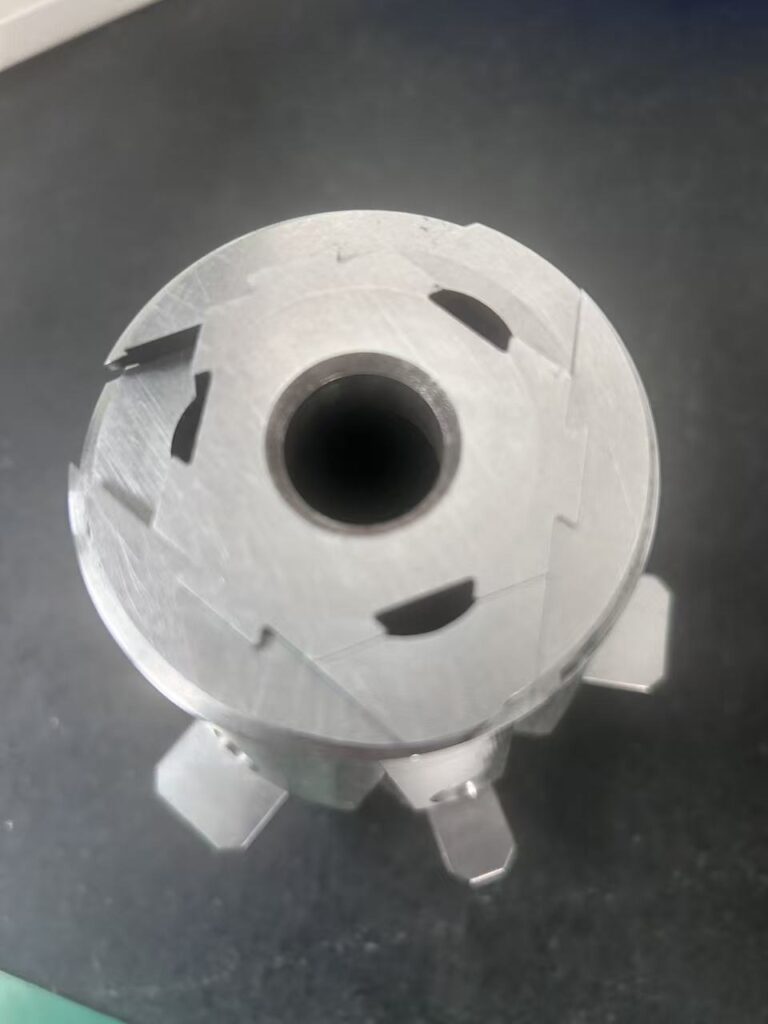
The core and cavity in injection molding function as the heart of the mold; they create the final shape of the plastic product. The cavity forms the exterior surface, while the core develops internal features such as holes, ribs, or hollow sections. These components must be machined with extreme precision, often to tolerances of ±0.01 mm, especially in industries requiring tight dimensional control.
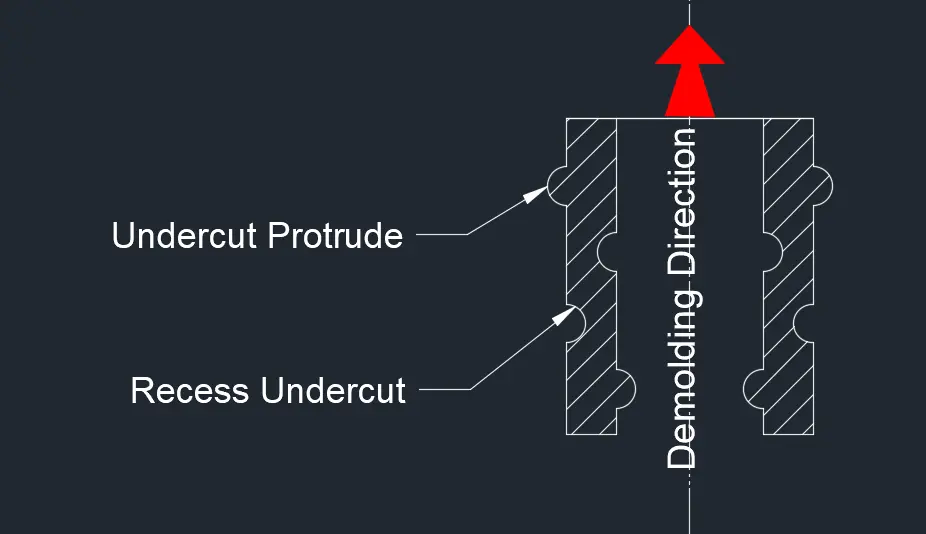
Proper venting, draft angles, surface finish, and thermal balance in the core and cavity influence part performance and surface quality. Modern tools may integrate slides, lifters, collapsible cores, or unscrewing mechanisms, depending on part complexity. These engineering decisions ensure consistent molding results while preventing sticking or deformation during ejection.
Nozzle and Sprue Bushing Design
The nozzle and sprue bushing design directly affect how molten plastic enters the mold. The sprue bushing acts as the first pathway for material to travel from the injection machine into the runner system. Correct taper angle, material hardness, thermal control, and polished flow surfaces ensure smooth melt flow without freeze-off or degradation.
A well-designed sprue and nozzle system improves energy efficiency, reduces scrap, and minimizes cycle time, all essential for maintaining consistent production in high-volume environments.
Runner System and Flow Distribution
Once the melt enters the tooling, the ejector pins and runner system work together to distribute plastic to each cavity. The runner system may include cold runners, sub-runners, or hot runners, depending on part requirements and production volume.
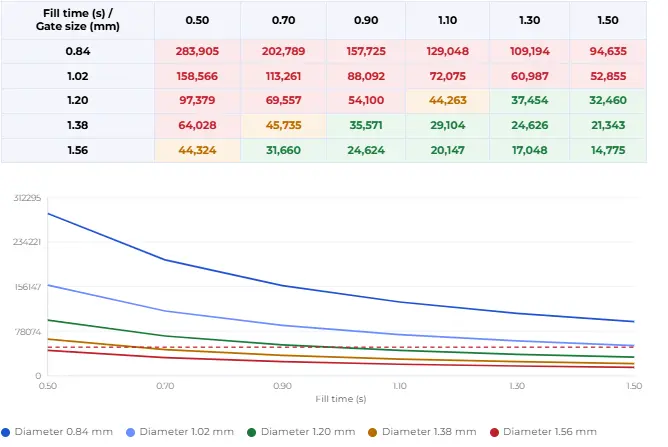
Optimized runner design ensures balanced filling, reduced pressure loss, and uniform material delivery. A poorly balanced runner often leads to inconsistent part weights, warpage, or cosmetic defects. Modern molds sometimes integrate rheological simulations to fine-tune runner dimensions, gate size, and flow length.
Injection Mold Cooling System
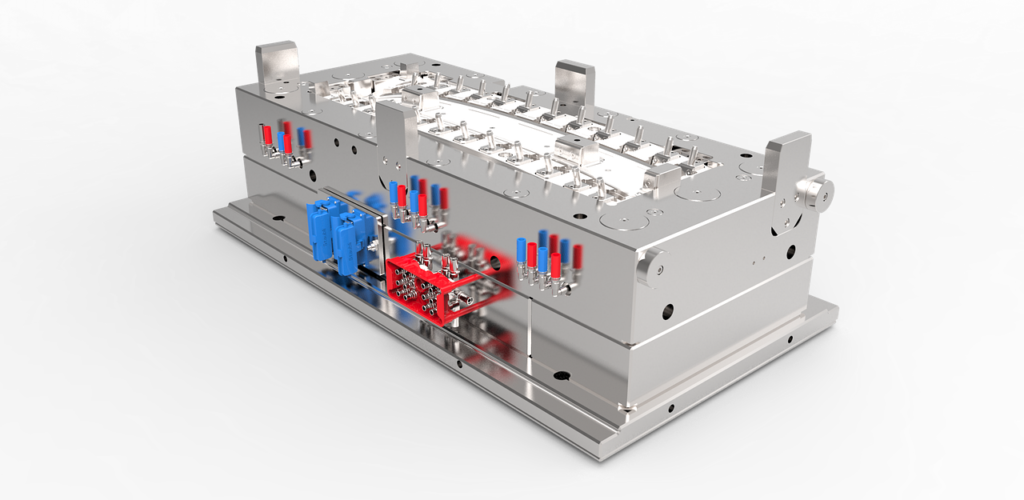
The injection mold cooling system is one of the most critical factors influencing cycle time and part consistency. Cooling channels are strategically embedded inside the mold to draw heat away from the molten plastic at a controlled rate. These channels may include straight lines, drilled holes, baffles, bubblers, or conformal cooling designs created with custom manufacturing.
Efficient cooling prevents shrinkage, eliminates warping, and reduces molding defects. Since more than 60% of cycle time is spent on cooling, optimized cooling channels dramatically improve productivity.
Venting System in Injection Molding
The venting system in injection molding allows trapped air and gases to escape the cavity as plastic flows in. Without proper venting, defects such as burn marks, short shots, or weld lines occur. Vents are typically placed at parting lines, ejector pins, thin sections, and ribs.
Advanced molds may use porous steel inserts or micro-venting technologies for thin-wall applications or high-viscosity materials. Effective venting ensures complete filling and protects both the mold and the part from heat buildup and pressure spikes.
Mold Interlocks and Guiding Pins
Precision alignment is crucial for mold performance. Injection Mold Components such as mold interlocks and guiding pins ensure that the core and cavity meet perfectly every cycle, maintaining part quality and preventing flash. Leader pins, bushings, taper locks, and side interlocks stabilize the mold during high clamping forces.
These components also protect delicate features inside the mold. When alignment is compromised, even slightly, production quality drops immediately. This is why guiding systems are always manufactured from hardened, wear-resistant materials..
Materials for Injection Mold Parts
Choosing the right materials for Injection Mold Components affects tool durability, heat resistance, cost, and performance. Common materials include:
- P20 steel for general-purpose molds
- H13 for high-heat applications
- S7 for impact-resistant ejector components
- 420 stainless steel for corrosion resistance
- Aluminum for rapid prototyping
- Beryllium copper inserts for enhanced thermal conductivity
Material selection depends on cycle time requirements, part geometry, resin type, and expected production volume.
Low Volume Insert Molding
While high-volume tooling requires hardened steel and complex cooling systems, low-volume insert molding uses cost-effective materials and simplified tooling strategies. This approach is ideal for prototypes, medical trials, early design iterations, or small-batch automotive components, where Injection Mold Components are optimized for flexibility and reduced tooling complexity. The process embeds metal or plastic inserts inside molded parts, offering durability and structural reinforcement.
Insert Molding Advantages and Disadvantages
Insert molding is common in automotive connectors, electronics, and medical devices. Understanding its pros and cons helps determine when it is appropriate.
Advantages:
Stronger assemblies, reduced labor, improved precision, and integrated functionality.
Disadvantages:
Higher tooling cost, longer cycle times, and risk of insert misalignment.
Insert Molded Parts for Automotive
Many OEM manufacturers rely on insert molded parts for automotive applications, such as:
- Sensor housings
- Electrical terminals
- Switch components
- Fuel system connectors
Automotive environments require high durability, chemical resistance, and tight tolerances, making insert molding a preferred method for critical assemblies.
Insert Molding Manufacturers
The quality of Injection Mold Components depends on choosing the right insert molding manufacturers, typically companies with expertise in high-precision machining, multi-shot molding, automation, and advanced process control. These manufacturers often provide tooling design, mold flow simulation, material selection guidance, and quality inspection services to ensure consistent results.
Thermoplastic Insert Molding
Using thermoplastics with metal inserts creates strong, lightweight, and cost-effective hybrid parts. Thermoplastic insert molding is ideal for structural applications where metal reinforcement is necessary without increasing assembly labor. Common resins include nylon, ABS, polycarbonate, and polypropylene.
Overmolding vs Insert Molding
When comparing Overmolding vs insert molding, the key difference lies in how the secondary material is applied. Insert molding places the metal or plastic insert into the mold before injection, while overmolding adds a secondary material onto a pre-molded part. Each has unique benefits depending on strength, aesthetics, and functional requirements.
Conclusion:
Injection mold components are the backbone of modern plastic manufacturing, and understanding how they function is crucial for engineers, designers, and procurement teams who want superior product performance. Every element, from the mold base, core, and cavity to the runner layout, cooling channels, ejector systems, venting networks, and guiding mechanisms, plays a direct role in part accuracy, mold longevity, and production efficiency. Companies that invest in high-quality injection mold components and precision tooling design significantly reduce cycle times, reject rates, and maintenance costs.
As industries push toward lighter materials, complex geometries, and higher regulatory standards, the importance of advanced mold engineering continues to grow. Thermoplastic insert molding, multi-shot tooling, conformal cooling, and automated insert placement are just some of the innovations shaping the future of manufacturing. Whether producing automotive connectors, medical housings, defense components, or consumer electronics, mastery of injection mold design enables faster production, more efficient cooling, and dramatically improved dimensional stability. Ultimately, successful molding doesn’t rely on a single component; it’s the synergy of every internal mechanism working in harmony. When mold designers understand this ecosystem, they can build tooling that is not only efficient but also durable enough to withstand millions of cycles with consistent precision.