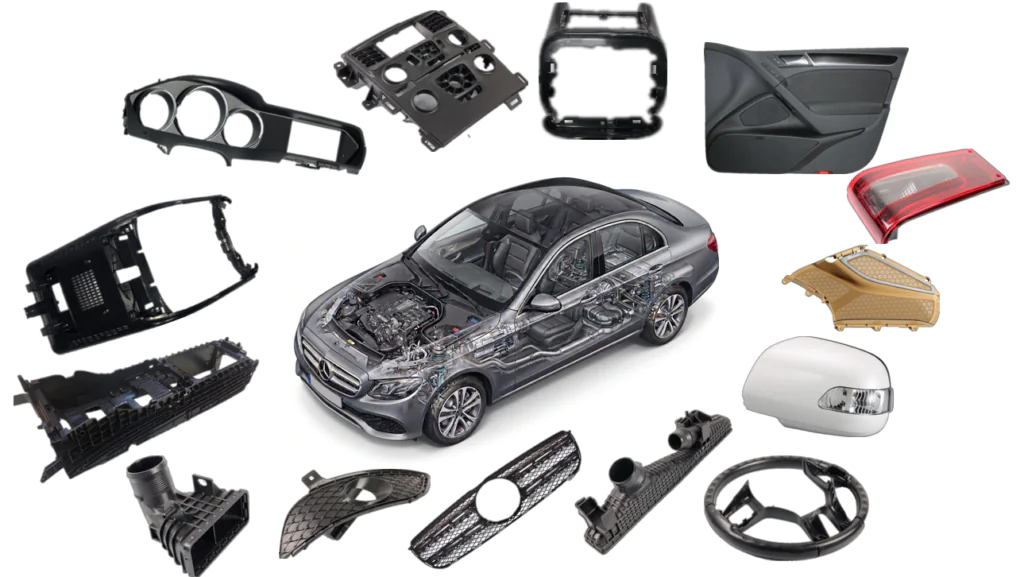
The modern automotive industry is moving toward lighter vehicles, faster production cycles, and higher design complexity, all while maintaining durability, safety, and cost efficiency. This is why automotive plastic injection molding has become the preferred manufacturing method for producing dashboards, trim parts, sensor housings, fluid reservoirs, under-the-hood components, and countless interior and exterior assemblies.
Engineers rely on this technology because it offers unmatched repeatability, material versatility, structural strength, and cost efficiency in automotive manufacturing. Whether it’s dashboard and interior trim parts, sleek exterior components, or rugged under-the-hood plastic components, injection molding delivers precise, durable, and lightweight solutions at scale. Combined with modern polymers, sustainable materials, and advanced tooling techniques, injection molding continues to power innovation across the automotive sector.
Why Automakers Choose Plastic Parts in the First Place?
Automotive manufacturers have steadily increased the use of engineered plastics. The reason is simple: plastics reduce vehicle weight while improving performance, safety, and design flexibility. With the industry pushing toward lightweighting in automotive design, polymers play a central role in improving fuel efficiency and extending EV battery range.
Plastics also offer corrosion resistance, energy absorption in collisions, electrical insulation, and design freedom that metal components cannot achieve. Compared to metal stamping, die casting, or fiberglass molding, automotive plastic injection molding provides a faster, more scalable, and more cost-effective pathway for producing components with tight tolerances and complex geometries
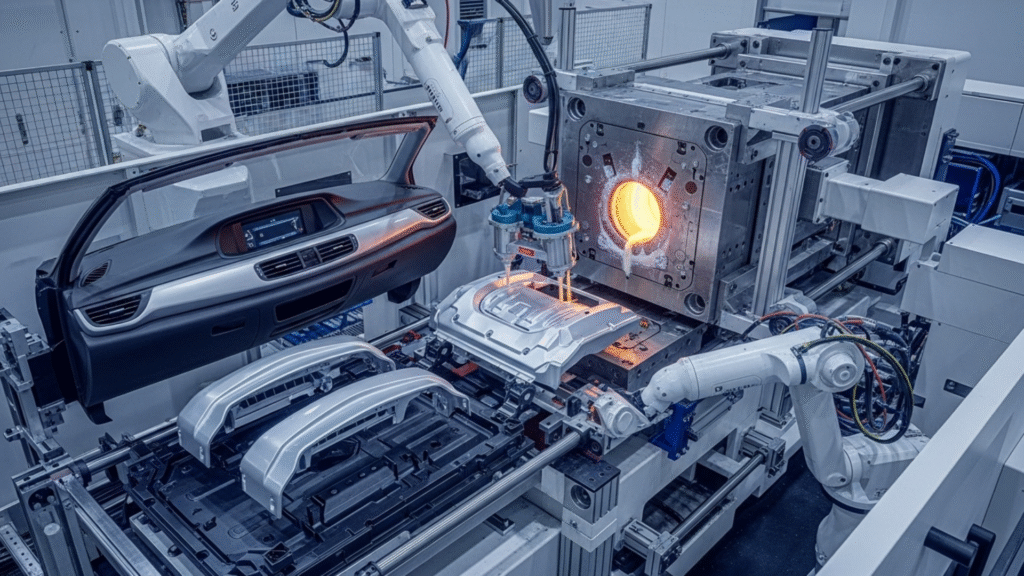
Advantages of Automotive Plastic Injection Molding
1. Precision Molding for the Automotive Industry
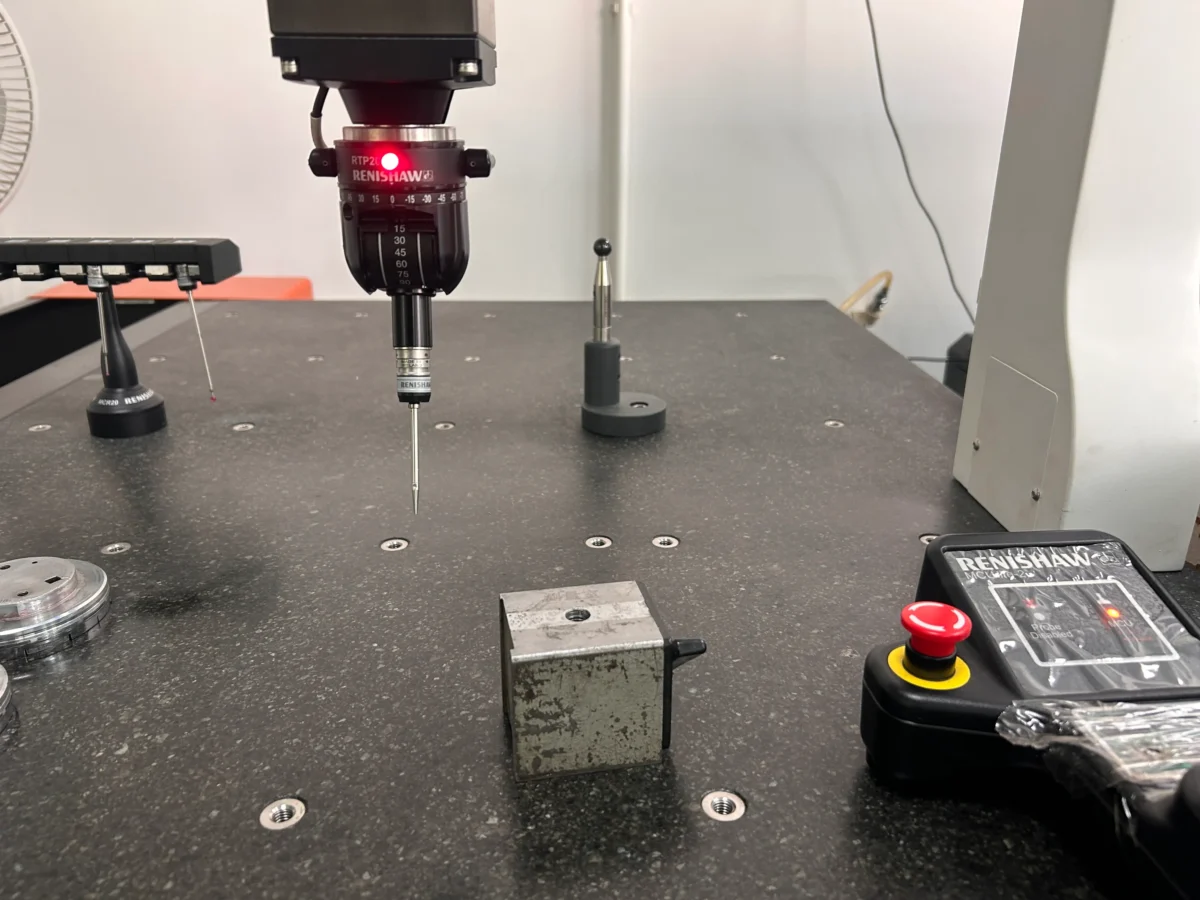
Automotive parts must meet strict dimensional and performance standards. Components such as instrument panels, steering column covers, HVAC bezels, and sensor housings require absolute consistency across millions of units. Injection molding supports:
- Tight dimensional tolerances
- Smooth surface finishes
- Multi-shot molding for combining materials
- Insert molding for metal reinforcement
- Overmolding for grips, seals, and aesthetics
- Perfect repeatability for OEM-grade performance
The ability to maintain precision across high volumes is one of the main reasons major OEMs rely on injection molding.
2. Cost Efficiency in Automotive Manufacturing
Automotive production requires long-term cost stability. Injection molding minimizes cost per part once tooling is complete.
Key cost advantages include:
- Fast cycle times (seconds per part)
- Multi-cavity molds produce multiple components simultaneously
- Low labor cost through automation
- Minimal post-processing
- High-volume economies of scale
Although mold fabrication can be expensive initially, the long-term cost reduction makes injection molding the most economical choice for annual production volumes in the millions.
3. Material Availability for Every Automotive Need
The automotive environment demands materials that withstand heat, vibration, chemicals, weather exposure, and mechanical stress. That’s why injection molding supports a broad range of high-temperature resistant plastics, engineering polymers, and composites. Common automotive polymers include:
- ABS (interior trim parts)
- PP (bumpers, dashboards, reservoir tanks)
- PMMA (headlamp lenses)
- PVC (interior panels)
- PA / glass-filled nylon parts (under-the-hood use)
- PU (foam structures)
- PC (transparent covers, housings)
- PBT / PPS (electrical components)
- PEEK (high-performance, heat-resistant parts)
Glass-filled nylon and high-temperature resistant plastics are essential for engine compartments, where components face continuous heat, fuel exposure, and mechanical stress.
4. Lightweighting in Automotive Design
Automotive OEMs aggressively pursue lightweighting to reduce emissions and extend mileage. Plastics are up to 50% lighter than metal while offering comparable strength for non-structural and semi-structural components. Injection-molded plastic parts help reduce vehicle mass across:
- Dashboards and cockpit modules
- Door interiors
- Seating components
- Bumper systems
- Air intake systems
- EV battery enclosures
- HVAC components
This weight reduction directly improves performance, fuel economy, and sustainability.
5. Superior Surface Finish and Aesthetic Flexibility
Injection molding provides exceptional surface quality for interior and exterior automotive parts. Molds can replicate textures such as matte grain, leather grain, soft-touch patterns, carbon-fiber patterns, or high-gloss surfaces, eliminating the need for secondary finishing. In addition, pigments and additives can be blended for:
- Exact color matching
- UV stability
- Wear resistance
- Anti-scratch surfaces
This makes injection molding ideal for visible parts like dashboards, trims, consoles, and pillar covers.
Applications Across Modern Vehicles
Injection molding contributes to nearly every area of a vehicle’s design. Dashboard and interior trim parts rely on molded plastics for seamless integration with infotainment screens, HVAC systems, and cabin controls. Exterior applications such as mirror housings, bumper inserts, grilles, and lighting components depend on polymers that maintain their appearance under harsh sunlight and weather conditions.
Meanwhile, under-the-hood plastic components include air intake manifolds, radiator end tanks, timing belt covers, engine shrouds, battery housings, and various thermal management parts. These components must endure high heat, chemical exposure, and constant vibration, making automotive plastic injection molding the ideal method due to its compatibility with heat-stable engineering plastics and its ability to deliver consistent performance across millions of units.
Injection Mold Tooling for Car Parts
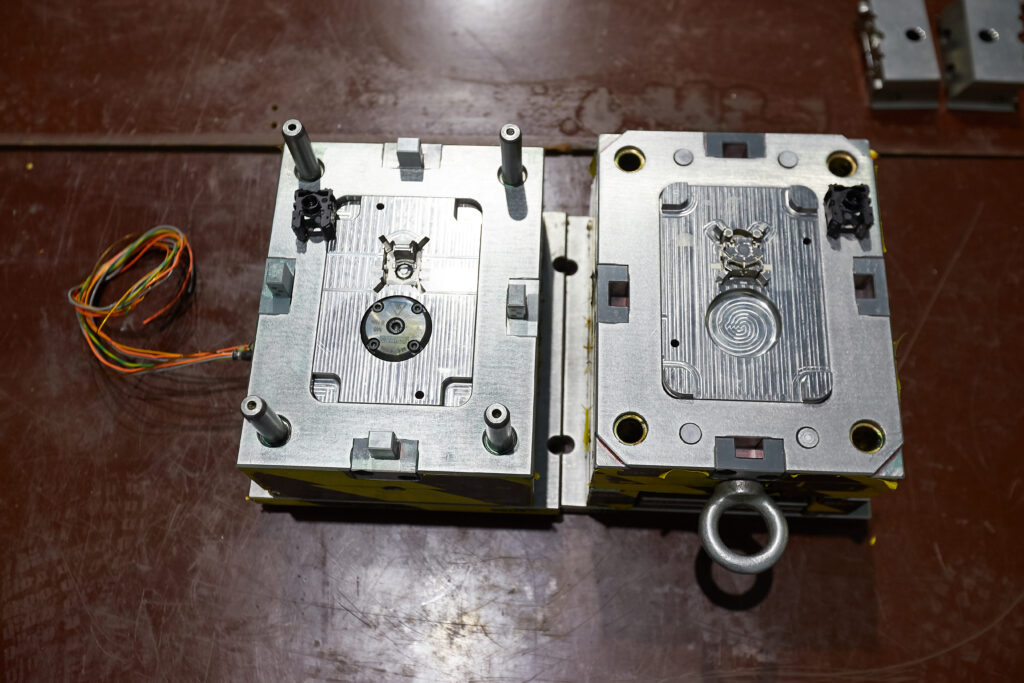
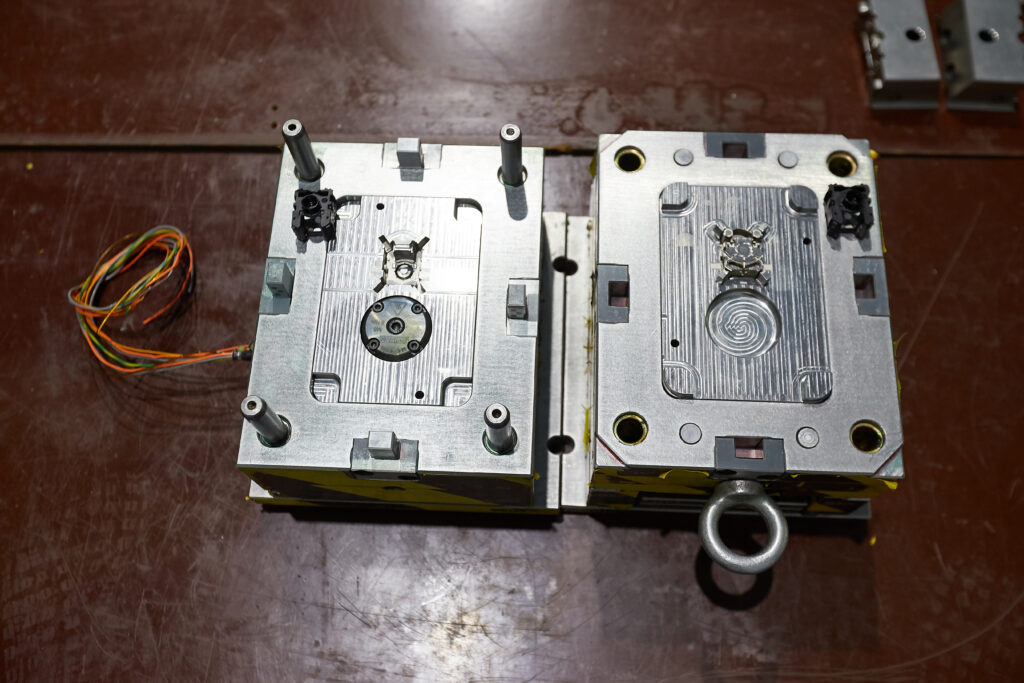
Injection mold tooling is the backbone of the automotive plastics industry. Car parts require extremely durable steel tools capable of producing millions of cycles while maintaining tight dimensional accuracy. Automotive tooling integrates advanced engineering, including moldflow analysis for predicting material behavior, hot runner systems for efficient material flow, and precision-machined cavities for dimensional integrity. In automotive plastic injection molding, tooling quality directly determines part precision, structural performance, and long-term consistency across large production volumes.
For complex components, overmolding and insert molding are used to combine plastics with metal inserts, electronic modules, or sealing elements. Since tooling directly influences cost, cycle time, and surface finish, the development process is rigorous and follows OEM standards such as PPAP and IATF 16949 compliance.
Working With OEM Plastic Suppliers
OEMs and Tier-1 suppliers depend on certified and reliable material partners to produce consistent, safe, and durable parts. OEM plastic suppliers provide materials that must meet global regulatory requirements, provide long-term availability, and support high-volume production.
Certification systems such as IATF 16949, IMDS reporting, REACH, and RoHS compliance ensure the materials meet industry and environmental expectations. These suppliers also help automotive manufacturers optimize polymer formulations for impact resistance, flame retardancy, heat stability, and long-term aging performance.
Sustainable Automotive Materials
Sustainability is becoming a defining factor in automotive manufacturing. Plastics contribute to eco-friendly design by reducing fuel consumption through lightweight construction, supporting recycling initiatives, and enabling the use of post-consumer resin blends. Automakers now incorporate recycled polypropylene, bio-based plastics, and low-emission polymers in areas such as interior trims, wheel well liners, trunk components, and HVAC housings.
Automotive plastic injection molding strengthens these sustainability efforts by allowing precision manufacturing with less material waste and supporting greener polymer formulations. Injection molding machines, especially electric and hybrid models, use less energy and produce less scrap, aligning with environmental goals. As global regulations push for greener production, sustainable materials will become even more central to automotive plastic part design.
Why Injection Molding Outperforms Other Manufacturing Methods?
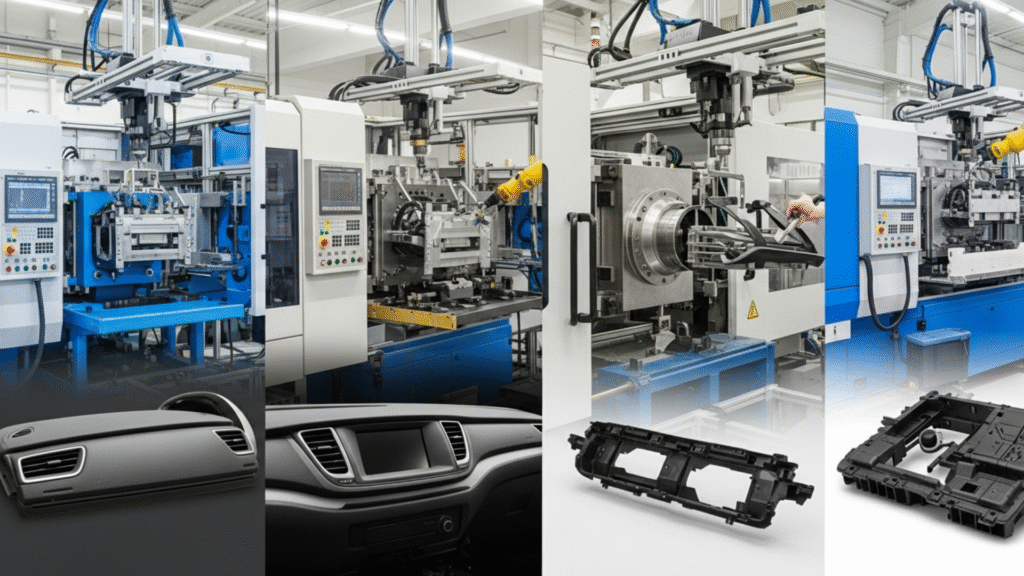
Compared with machining, die casting, fiberglass molding, or 3D printing, injection molding consistently delivers the best combination of precision, strength, scalability, and cost efficiency. It supports complex geometries, integrated features, repeatable measurements, and superior aesthetics.
Most importantly, injection molding produces parts in seconds, making it the only method capable of meeting the massive production demands of the automotive industry. With the rise of EVs, ADAS systems, autonomous driving hardware, and advanced interior integrations, the technology will continue to be the go-to choice for high-performance, mass-produced automotive components.
Conclusion:
Automotive manufacturing depends on consistency, durability, scalability, and cost control, four areas where automotive plastic injection molding excels. From dashboard and interior trim parts to rugged under-the-hood plastic components, injection molding delivers lightweight, strong, and cost-effective solutions using advanced polymers such as glass-filled nylon and high-temperature resistant plastics.
Modern tooling, sustainability initiatives, and precision engineering ensure that injection molding remains essential to the industry’s transformation toward lighter vehicles, electrification, and improved energy efficiency. As OEMs continue demanding tighter tolerances, faster production, and greener materials, injection molding will remain the preferred method for building the next generation of automotive plastic parts.